Trump's NATO Summit Remarks Shifted From Threats to Praise
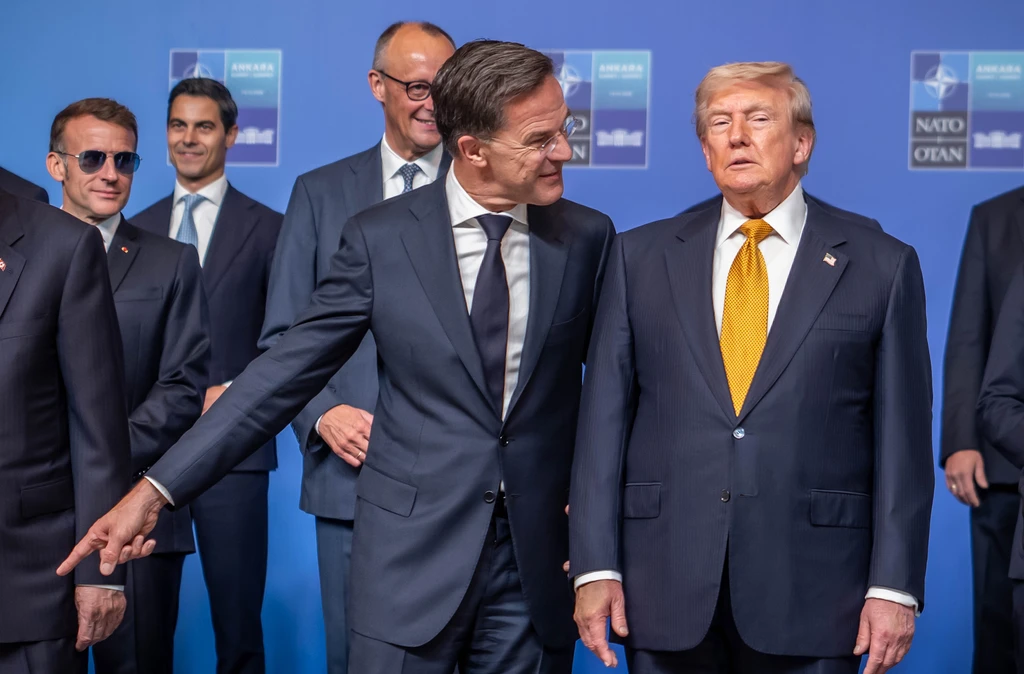
During his appearance at the NATO summit, U.S. President Donald Trump exhibited significant shifts in his demeanor and rhetoric, oscillating between issuing threats and offering praise. Reuters analyzed the fluctuations in the American president's disposition while he was in Ankara. The unpredictable nature of his statements created uncertainty among allies regarding the stability of U.S. commitments to the alliance. Trump's remarks at the summit were closely watched for their potential impact on transatlantic relations and collective security. The analysis highlighted the contrast between his critical stance on burden-sharing and his subsequent commendations. This variability in his public statements has been a recurring theme in his foreign policy approach. Allies often find themselves navigating the complexities of U.S. intentions based on these evolving pronouncements. The situation underscores the challenges faced by international partners in maintaining consistent diplomatic engagement with the United States under the current administration. The summit's proceedings were thus marked by a degree of apprehension and strategic recalibration due to the president's unpredictable communication style.
The observed shifts in President Trump's rhetoric at the NATO summit, moving from threats to praise, highlight a communication strategy that introduces strategic ambiguity. This approach, while potentially serving to disrupt established diplomatic norms and encourage renegotiation of alliance terms, also generates uncertainty among allies. Such unpredictability can strain long-term alliance cohesion and complicate coordinated responses to geopolitical challenges. From a systems perspective, the reliance on ad-hoc pronouncements rather than consistent policy frameworks may undermine the institutional trust necessary for collective security. Future alliance structures may need to account for such volatile leadership dynamics, perhaps by building more resilient mechanisms for consensus and commitment that are less susceptible to individual pronouncements. The long-term implications involve assessing whether this approach fosters greater burden-sharing or erodes the foundational principles of mutual defense.
AI-generated to prompt reflection — not editorial opinion, not advice, not a statement of fact. How this works.