Trump's Peace Board Reassures Israel on Gaza Withdrawal Amidst Disagreement
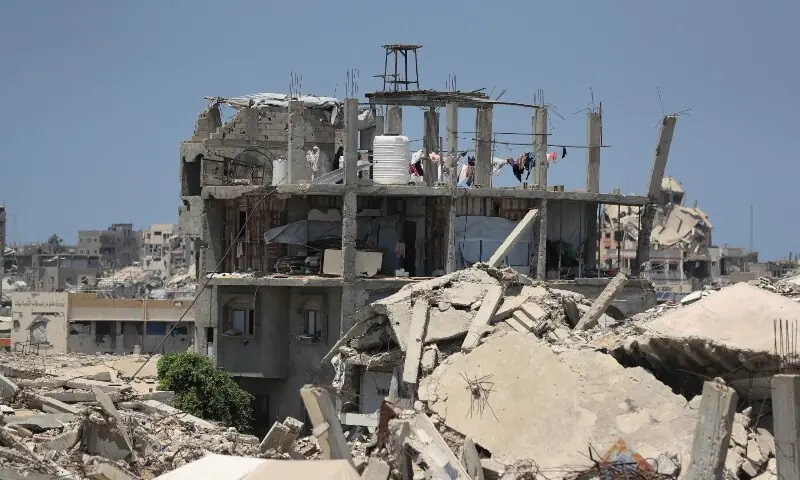
The US President Donald Trump's Board of Peace has assured Israeli Prime Minister Benjamin Netanyahu that any withdrawal from Gaza will only commence after Hamas fully disarms. This reassurance followed objections from Israeli security cabinet members who urged a review of the deal. Netanyahu's office had communicated concerns to the US after Trump initially praised Hamas's agreement to hand over weapons. Nickolay Mladenov, a representative for the Board of Peace, met with Netanyahu to discuss these issues, stating a "common understanding of the shared objectives" was reached. The board clarified on X that Israel's withdrawal beyond the current Hamas-controlled area would only happen post-decommissioning, as committed by Hamas to mediators. Even with a withdrawal, Israel would retain control over much of Gaza under a previously brokered ceasefire. Hamas confirmed its adherence to the ceasefire agreement's second phase and awaited official confirmation from Mladenov. Earlier, Israel had objected to a public text calling for a phased withdrawal and immediate cessation of strikes, with a spokesperson stating the released version did not reflect Israel's positions. Far-right Finance Minister Bezalel Smotrich had also demanded an immediate cabinet vote on the plan. This situation highlights a disconnect between Trump and Netanyahu, especially as Netanyahu faces an upcoming election. Disagreements have also surfaced regarding Iran diplomacy. Mediating countries Qatar, Egypt, and Turkey criticized Israel for renewed strikes in Gaza, citing civilian casualties and targeting of infrastructure.
This situation illustrates the complexities of international diplomacy, particularly in conflict zones, where stated objectives can diverge from implementation realities and domestic political pressures. The Board of Peace's effort to broker a phased withdrawal contingent on disarmament highlights the inherent challenge of verifying compliance and managing trust between adversarial parties. The differing interpretations and public statements from Israeli officials and Hamas underscore the difficulty in achieving unified messaging and consensus, even among those ostensibly aligned. This dynamic suggests that the success of such peace initiatives hinges not only on the terms of the agreement but also on robust, transparent verification mechanisms and consistent communication channels to bridge gaps between leadership and on-the-ground actions. Future efforts might benefit from clearer frameworks for de-escalation and verifiable disarmament, alongside mechanisms to address the immediate humanitarian concerns and the political implications for leaders involved in protracted negotiations.
AI-generated to prompt reflection — not editorial opinion, not advice, not a statement of fact. How this works.
