Trump's Peace Council: Key Members and Controversies
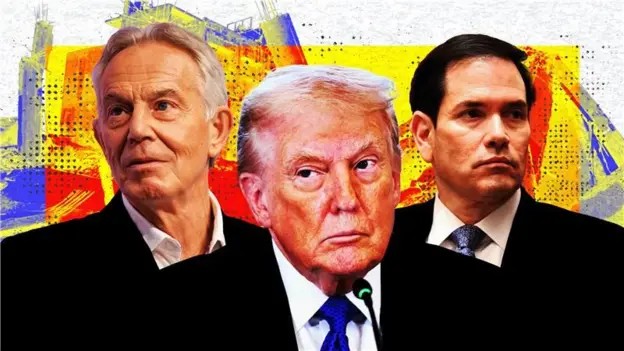
Donald Trump has established a "Peace Council" and its associated executive boards, aimed at overseeing the reconstruction of Gaza and ending the conflict with Hamas. The initiative, launched in January 2026 at the World Economic Forum in Davos, proposes a gradual plan for the withdrawal of Israeli forces from Gaza. The Hamas group has reportedly agreed to "total disarmament" as part of this accord. However, Israel, which currently controls a significant portion of Gaza, has not yet officially commented on the agreement. The Peace Council's charter does not explicitly mention Gaza or Palestinian territories, raising concerns about its potential scope and overlap with United Nations functions. Membership in the organization requires a $1 billion fee, and Trump himself serves as the lifetime president, holding considerable decision-making power. Over 20 countries, including Israel, Qatar, Saudi Arabia, Turkey, and Egypt, have joined, but key European allies like the UK and France have abstained, citing fears of undermining the UN. Russia and China have also not joined, and Canada's invitation was revoked without explanation. Brazil conditioned its participation on the inclusion of Palestinian representatives, with President Lula da Silva criticizing the council's structure as potentially excluding Palestinian voices. The United States Secretary of State, Marco Rubio, and former UK Prime Minister Tony Blair are part of the Founding Executive Board, which Blair's inclusion is controversial due to his role in the Iraq War. Notably, neither the Peace Council nor its executive boards include Palestinian representatives, a point of significant criticism.
The establishment of Donald Trump's Peace Council and its executive boards presents a complex geopolitical dynamic, potentially creating parallel governance structures to existing international bodies like the UN. The significant financial commitment required for membership and the lifetime presidency of Donald Trump suggest a model prioritizing executive control and financial backing over broad multilateral consensus. The absence of Palestinian representation on the executive boards, despite the stated aim of peace in Gaza, raises questions about the inclusivity and long-term legitimacy of the initiative. This structure could inadvertently exacerbate existing tensions by creating an alternative framework for conflict resolution and reconstruction, potentially fragmenting international efforts and diminishing the influence of established diplomatic channels. The council's focus on private investment and reconstruction, as evidenced by Jared Kushner's proposed master plan, may also present a tension between humanitarian needs and commercial development interests in the region.
AI-generated to prompt reflection — not editorial opinion, not advice, not a statement of fact. How this works.