Trump's Power Source Revealed at NATO Summit: Norm Violation
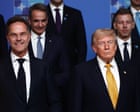
During the recent NATO summit, former US Secretary of Labor Robert Reich observed that former President Donald Trump's power stems from his willingness to disregard established norms, rules, and laws, leaving others to manage the consequences. Trump expressed significant disappointment with NATO, questioning the financial contributions of member states and their commitment to collective security. He also reignited his interest in acquiring Greenland, criticized European energy and immigration policies, and made remarks about the conflict between Kyiv and Moscow that concerned allies. Despite these actions and statements, Trump was met with considerable courtesy and respect from other NATO leaders, who accorded him treatment similar to any previous US president. Trump himself characterized the summit as highly successful, reporting a positive atmosphere of "love" and "unity."
The dynamics observed at the NATO summit highlight a tension between adherence to established international protocols and the disruptive influence of a leader prioritizing transactional relationships. Trump's approach, characterized by norm violation, appears to leverage the expectation of predictable behavior among allies, creating uncertainty that can be perceived as a source of leverage. This strategy challenges traditional diplomatic frameworks that rely on mutual trust and shared commitments. The response from other NATO members, balancing the need to maintain alliance cohesion with the disruptive tactics employed, suggests a complex calculus of managing immediate political pressures against long-term strategic interests. Future international relations may increasingly grapple with how to maintain stability and cooperation when faced with actors who strategically exploit the predictability of established systems.
AI-generated to prompt reflection — not editorial opinion, not advice, not a statement of fact. How this works.