Trump's Shifting Stance on NATO Dominates Summit's Final Hours
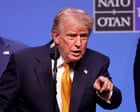
US President Donald Trump expressed feeling "tremendous love" from Western leaders at the NATO summit, a stark contrast to his earlier criticisms. Just hours before this declaration, Trump had publicly lambasted NATO members for their defense spending and for not assisting the US in potential actions against Iran. His mixed messaging became a defining feature of the summit's closing stages. Earlier in the proceedings, Trump had also referred to Iran's leadership as "scum" and reiterated his desire for the United States to gain control over Greenland. The summit, held over two days in Ankara, Turkey, concluded with leaders relieved by Trump's renewed public support for Article 5, NATO's mutual defense clause, which they considered a significant achievement. Despite the president's volatile rhetoric, the alliance leaders were prepared for the worst but ultimately hailed his affirmation of Article 5 as a key victory.
Donald Trump's communication style at the NATO summit, characterized by sharp criticism followed by expressions of affection, highlights a tension between transactional demands and alliance cohesion. This approach challenges traditional diplomatic norms, potentially creating uncertainty for allies regarding the long-term commitment to collective security. The focus on immediate defense spending contributions, while a valid concern for burden-sharing, may overshadow the strategic benefits of a unified alliance in a complex geopolitical landscape. Future alliance stability may depend on finding a balance between individual member accountability and the enduring value of mutual defense pacts, particularly as global power dynamics evolve and new threats emerge.
AI-generated to prompt reflection — not editorial opinion, not advice, not a statement of fact. How this works.