Trump's World Cup Podium Presence Sparks Controversy Amidst Political Tensions
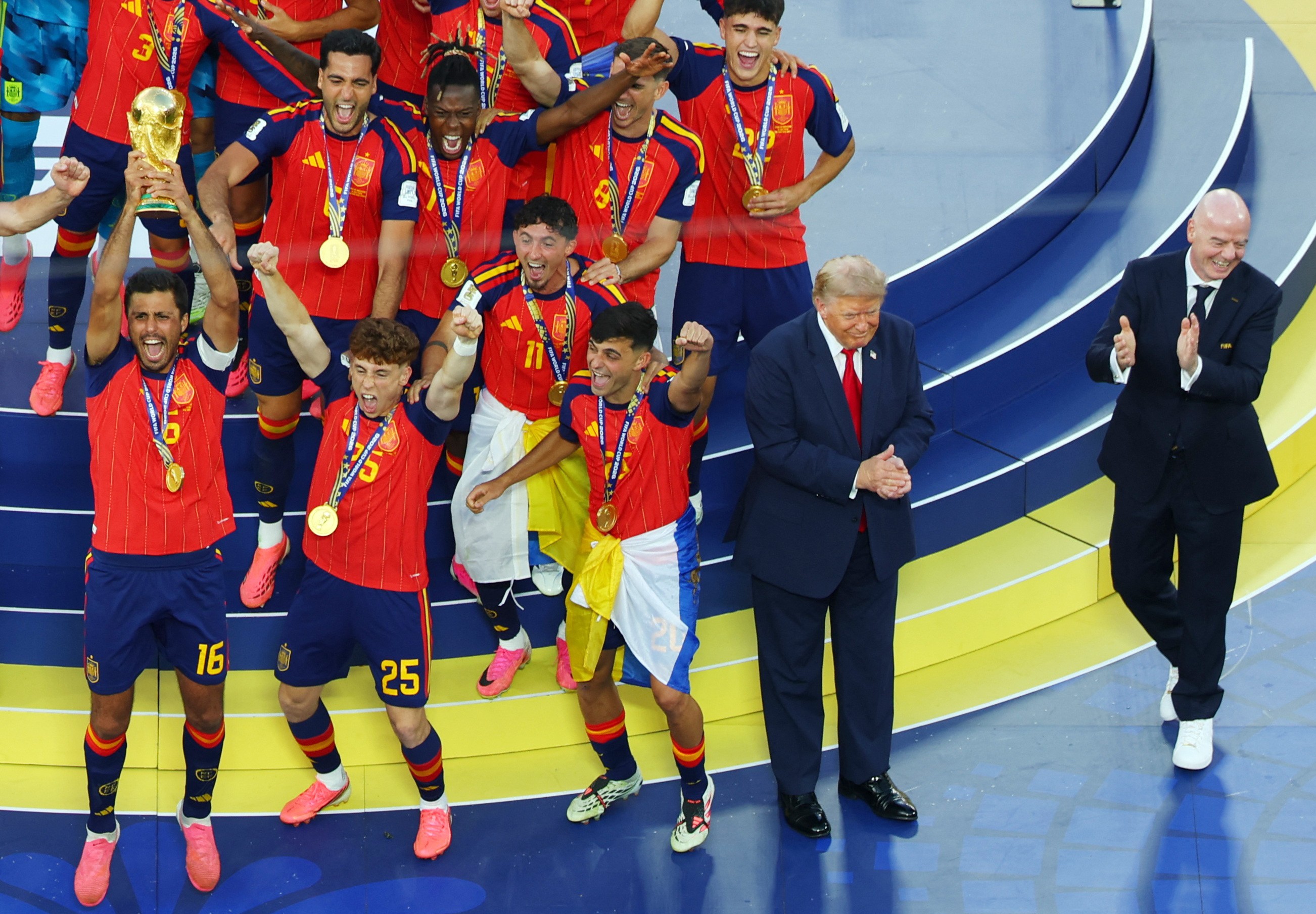
During the 2026 World Cup final, U.S. President Donald Trump created an awkward scene by lingering on the podium as the Spanish team prepared to receive their trophy. This incident echoed a similar situation at the Club World Cup final the previous year. Despite attempts by FIFA President Gianni Infantino and Spanish captain Rodri to move him, Trump remained on the edge of the group, seemingly seeking political prominence. This event occurred against a backdrop of strained U.S.-Spain relations, with Trump having previously criticized Spain as a "lost cause" and a "terrible partner in NATO." Disputes between Trump and Spanish Prime Minister Pedro Sánchez have centered on Spain's military spending and its refusal to grant U.S. forces access to bases during the conflict with Iran. Trump had even threatened to cut ties with Spain, calling its people "bad and hopeless." The final also saw Trump interact with other political figures, including King Felipe VI of Spain, Canadian Prime Minister Mark Carney, and Mexican President Claudia Sheinbaum. Argentinian President Javier Milei, a staunch ally of Trump, watched from Buenos Aires. Upon entering the field with the trophy, Trump received boos from the crowd. He commented on the match's balance, acknowledging Spain's superior play. As the Spanish team celebrated, Trump again sought to be part of the moment, but Rodri delayed raising the trophy until Trump moved aside. Meanwhile, the Argentinian team displayed poor sportsmanship by turning their backs on the champions' celebration.
The incident at the World Cup final highlights the persistent challenge of separating political figures from sporting events, particularly when national pride and international relations are intertwined. President Trump's actions, perceived as an attempt to leverage a global sporting moment for political gain, underscore the complex dynamics of soft power and national image. The strained relationship between the U.S. and Spain, exacerbated by disagreements over NATO contributions and military access, suggests underlying geopolitical tensions that transcend immediate events. This situation prompts reflection on how international sporting platforms can be managed to foster unity rather than political division, and whether the increasing politicization of global events risks undermining the unifying spirit of sports. The contrasting reactions of various national leaders and teams also reveal differing approaches to diplomatic engagement and sportsmanship in the international arena.
AI-generated to prompt reflection — not editorial opinion, not advice, not a statement of fact. How this works.