Trump's World Cup Presence: Political Theater Amidst International Scrutiny
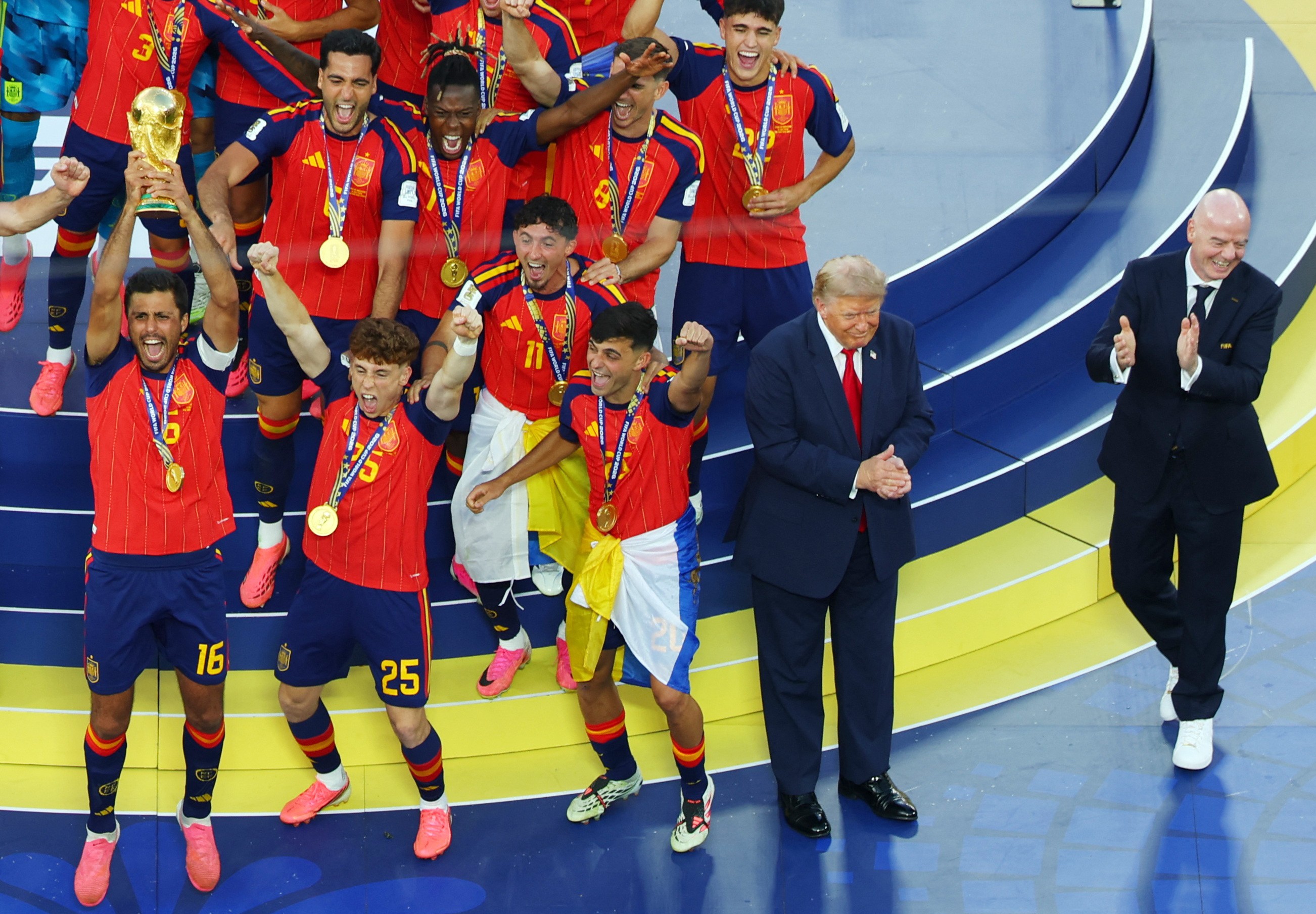
During the recent World Cup held in the United States, former President Donald Trump's presence became a focal point, not just for his attendance at the final match where Spain defeated Argentina 1-0, but for his perceived attempts to leverage the event for domestic political gain. Trump's actions, including attempting to join the Spanish team's trophy celebration and his prior involvement in a controversial red card decision for US player Folarin Balogun, drew significant attention and criticism. Analysts suggest these interventions were primarily aimed at influencing his political base ahead of upcoming midterm elections, rather than genuinely enhancing the tournament's international reputation. Trump himself claimed the event was the most successful sporting event in history and that it improved the US's international standing. However, critics like Professor Jules Boykoff argue that Trump's policies, such as anti-immigration measures, undermined the spirit of the tournament and FIFA's motto. The intervention in the Balogun case, in particular, is seen by some as a political misstep that alienated potential supporters. While Trump has expressed interest in the US hosting future World Cups, his public appearances at sporting events outside of the UFC have often been met with boos, suggesting a more receptive audience within the MMA organization.
The narrative surrounding Donald Trump's engagement with the World Cup highlights a recurring theme of leveraging international events for domestic political capital. The analysis suggests a strategic intent to project an image of influence and control over global organizations like FIFA, primarily to resonate with a specific political base. This approach, however, risks alienating broader international goodwill and potentially overshadowing the event's intended purpose of global unity. The tension between Trump's actions and the FIFA slogan 'football unites the world' points to a systemic contradiction: the use of a unifying global platform for divisive domestic political messaging. Looking ahead, the integration of major sporting events with national political cycles, especially in an era of heightened geopolitical awareness and the increasing influence of social media, presents ongoing governance challenges for international sports bodies. The long-term impact on the perception of both the host nation and the sport itself will depend on how effectively such political interventions are managed and how future events balance national interests with global sporting ideals.
AI-generated to prompt reflection — not editorial opinion, not advice, not a statement of fact. How this works.