Trump: Saudi nuclear deal tied to Abraham Accords, Israel recognition
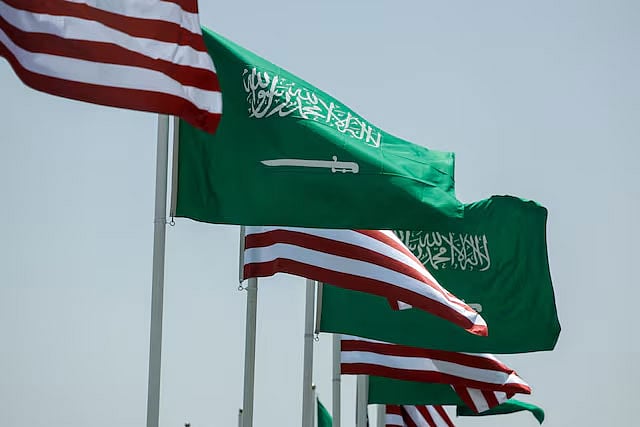
Former U.S. President Donald Trump stated that a civilian nuclear cooperation agreement between Washington and Riyadh will only be finalized if Saudi Arabia joins the Abraham Accords. Trump emphasized on his social media platform, Truth Social, that this program would not include uranium enrichment capabilities. The agreement is strictly for the peaceful use of nuclear energy, similar to programs in Iran, the UAE, and other nations. However, its activation is contingent on Saudi Arabia's participation in the Abraham Accords, a U.S.-brokered initiative aimed at normalizing relations between Arab countries and Israel. The U.S. is not opposed to civilian nuclear facilities and programs. Previously, the U.S. and Saudi Arabia had reached a preliminary understanding on nuclear cooperation, allowing Saudi Arabia to use U.S. technology for uranium enrichment and nuclear reactor construction. This understanding notably excluded the immediate UN inspection conditions previously imposed on Iran. Saudi Arabia has consistently maintained that it will not join the Abraham Accords without a framework for establishing a Palestinian state. The Abraham Accords, initiated in 2020, are a series of agreements normalizing relations between Israel and several Arab nations, formally signed at the White House on September 15, 2020. Signatories commit to enhancing diplomatic ties, trade, investment, and security cooperation. To date, the UAE, Bahrain, Morocco, and Sudan have joined these accords.
This statement highlights the complex geopolitical leverage employed in Middle East diplomacy, where normalization with Israel is explicitly linked to significant technological and energy cooperation with the United States. The framing suggests a transactional approach, where U.S. strategic interests, including nuclear non-proliferation and regional stability, are pursued through incentivizing broader diplomatic integration. The conditionality underscores the persistent centrality of the Israeli-Palestinian conflict in Arab foreign policy, even as other nations have moved towards normalization. This dynamic presents a challenge for future U.S. administrations seeking to advance regional peace and security, as it highlights the difficulty of decoupling core diplomatic objectives from long-standing territorial and sovereignty issues.
AI-generated to prompt reflection — not editorial opinion, not advice, not a statement of fact. How this works.