Trump Threatens Tariffs on Canada Amid Wildfire Smoke Concerns
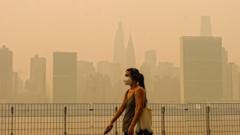
Former U.S. President Donald Trump has reportedly threatened to impose tariffs on Canada, citing the wildfire smoke that has blanketed northern U.S. cities. The smoke, originating from Canadian wildfires, has led to severe air quality issues in various urban centers across the northern United States. In response to the situation, Canadian leader Mark Carney stated that both the United States and Canada share an equal responsibility in combating climate change. Carney emphasized that climate change is a significant factor exacerbating wildfire conditions. Experts concur with this assessment, noting that the warming climate contributes to more frequent and intense wildfires. The issue highlights the transboundary impacts of environmental challenges and the interconnectedness of climate policy between the two nations. The potential tariffs introduce a complex layer to the diplomatic and environmental discussions.
The invocation of trade tariffs by former President Trump in response to environmental conditions like wildfire smoke suggests a potential strategy of leveraging economic pressure to influence climate policy and international cooperation. This approach, however, may overlook the shared responsibility and systemic nature of climate change, as highlighted by Mark Carney. Climate change is a global issue driven by cumulative emissions, and attributing specific environmental events to single national actions or using them as leverage for bilateral trade disputes could complicate collaborative solutions. The situation presents a tension between immediate national interests and the long-term, collective action required to address climate change. Future policy frameworks might need to better integrate environmental resilience and climate adaptation into international trade agreements, recognizing that ecological systems transcend political borders and require coordinated, rather than punitive, responses.
AI-generated to prompt reflection — not editorial opinion, not advice, not a statement of fact. How this works.