Trump Threatens Tariffs Over Canadian Wildfire Smoke
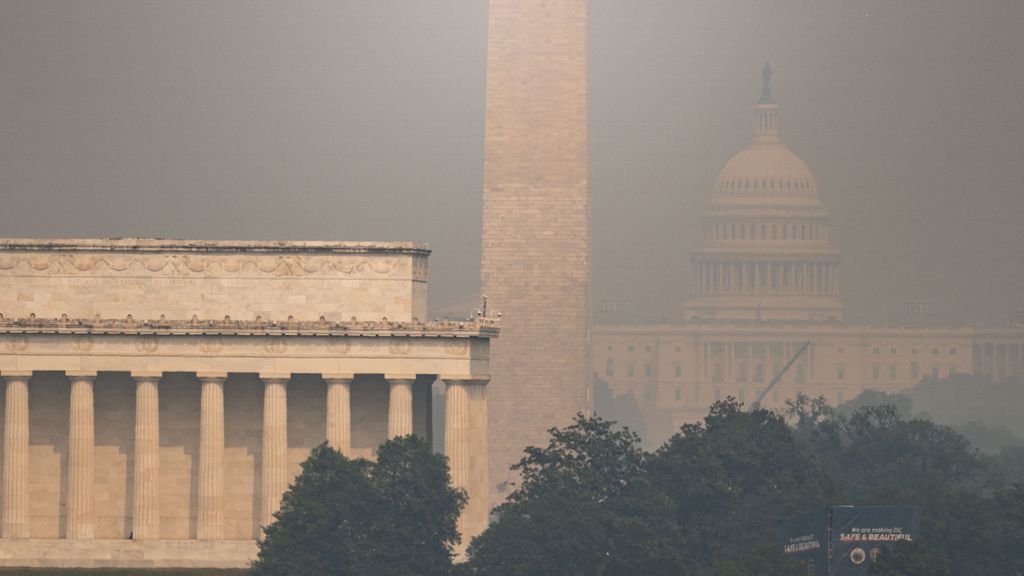
U.S. President Donald Trump has expressed anger over the smoke from Canadian wildfires that has been blanketing the United States for days. In an online statement, he threatened to increase import tariffs on Canada to recoup damages, though the specifics of this plan remain unclear. Trump stated that Canada is not properly managing its forest underbrush, leading to unhealthy, polluted air entering the U.S., which he deemed unacceptable. He proposed adding a pollution tax to existing import duties, which currently stand at 35% for many Canadian products, with some variations.
Hundreds of wildfires are currently burning across Canada, with most still uncontrolled. The resulting smoke has drifted over the northeastern U.S., causing poor air quality in major cities like Chicago, Washington, and New York. Residents are experiencing stinging eyes, breathing difficulties, and coughing. Measures such as distributing face masks, canceling outdoor activities, and opening public spaces like libraries for respite have been implemented. There are concerns for an upcoming World Cup final in New York, and a Major League Baseball game in Ohio was postponed due to unsafe playing conditions.
Canadian Prime Minister Justin Trudeau, accustomed to Trump's threats, briefly responded by emphasizing the shared responsibility of all nations, including the U.S., in combating climate change. Ontario Premier Doug Ford suggested that politicians should focus on providing aid rather than engaging in disputes, recalling past assistance offered to the U.S. by Canada.
This situation highlights the complex interplay between environmental events and international relations, particularly under periods of heightened political tension. The U.S. president's response frames the cross-border environmental issue as a trade grievance, suggesting a potential for punitive economic measures. This approach may overlook the systemic nature of climate change and forest management challenges, which require collaborative, long-term strategies rather than retaliatory tariffs. Such actions could strain diplomatic ties and impede coordinated efforts needed to address global environmental crises. The Canadian officials' responses emphasize mutual aid and shared climate responsibilities, advocating for a more cooperative framework. Looking ahead, the increasing frequency and intensity of extreme weather events due to climate change will likely test existing international agreements and necessitate more robust, forward-thinking governance structures for environmental protection and disaster response.
AI-generated to prompt reflection — not editorial opinion, not advice, not a statement of fact. How this works.