Trump to Seek Supreme Court Rehearing on Birthright Citizenship
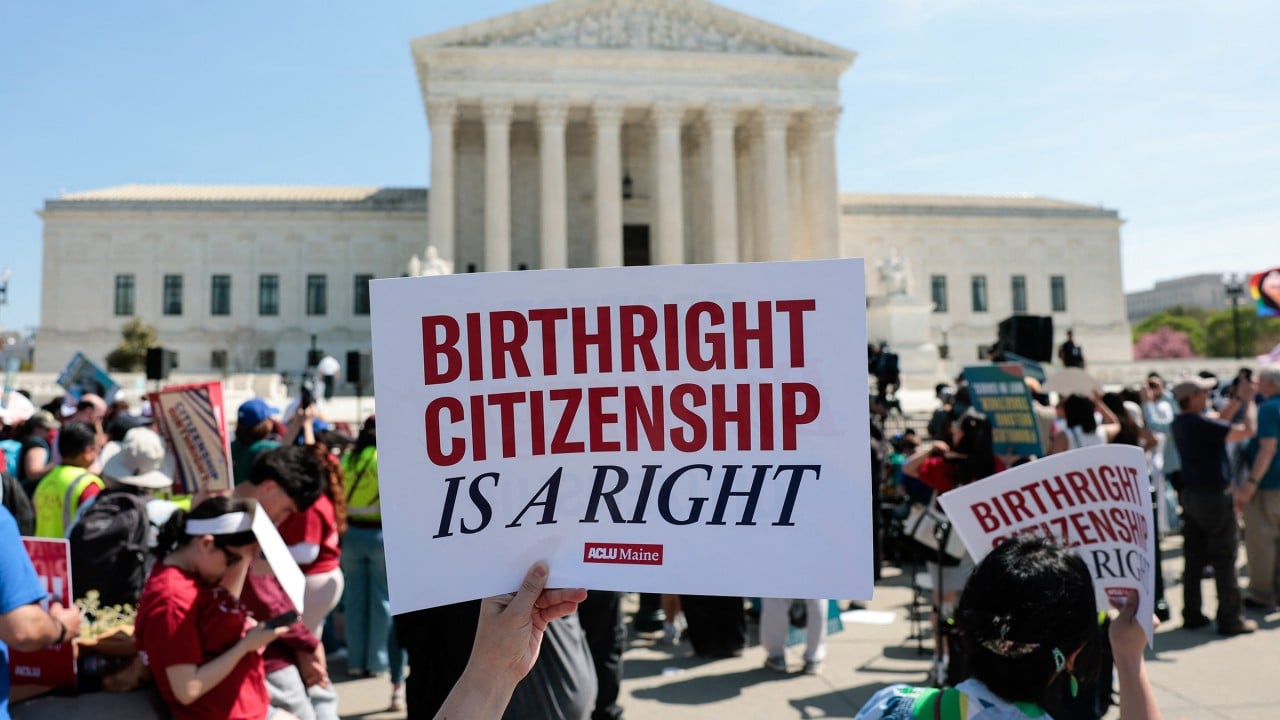
President Donald Trump announced on Wednesday his intention to request a rehearing from the Supreme Court regarding a case that challenged his executive order on birthright citizenship. This move represents an unlikely attempt to overturn the court's recent decision that rejected his policy aimed at restricting citizenship for individuals born in the United States. The Supreme Court had previously denied Trump's effort to limit birthright citizenship, citing the U.S. Constitution's 14th Amendment. This amendment explicitly grants citizenship to those born on American soil. The court's rejection of his directive was a significant setback for one of his key policy initiatives. Trump's decision to pursue a rehearing indicates his continued determination to pursue this policy, despite the legal obstacles.
The pursuit of a Supreme Court rehearing on birthright citizenship, following an initial rejection, highlights the executive branch's persistent engagement with constitutional interpretation. This strategy may reflect an effort to test the boundaries of judicial review and executive authority, potentially seeking to influence future legal discourse or mobilize specific voter demographics. The long-term implications could involve further judicial scrutiny of immigration-related executive actions and their alignment with constitutional principles, particularly the 14th Amendment. Such actions may also signal a broader trend of leveraging legal and constitutional debates within the political arena, shaping public perception and policy direction in the lead-up to future elections.
AI-generated to prompt reflection — not editorial opinion, not advice, not a statement of fact. How this works.