Trump Vows to Exile 'Communists' in US Speech at Mount Rushmore
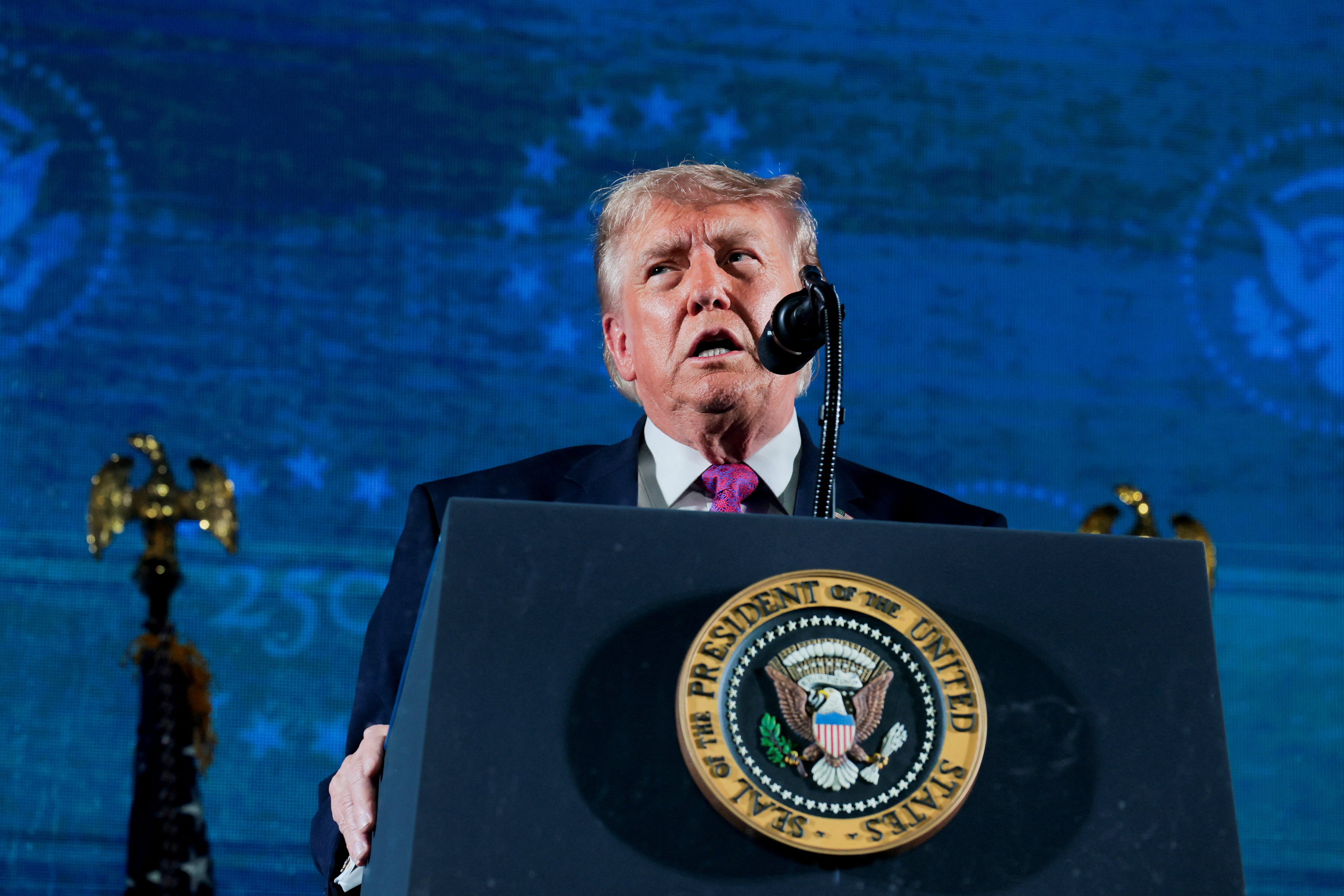
During a speech at Mount Rushmore kicking off the United States' 250th-anniversary celebrations, U.S. President Donald Trump launched strong attacks against individuals he labeled as "communists." Trump explicitly promised to "send them into exile" and "chase them out" of the country. The address, delivered at the iconic landmark, focused heavily on this theme, framing political opponents or ideologies as a threat to the nation. This rhetoric marks a significant escalation in Trump's political messaging, using charged language to target perceived enemies within the United States. The event itself was designed to evoke national pride and historical significance, serving as a backdrop for Trump's assertive political declarations.
The rhetoric employed by President Trump at Mount Rushmore, framing political opponents as "communists" to be "exiled," represents a potent use of historical symbolism and divisive language. Such appeals often tap into deep-seated national anxieties and historical narratives of ideological conflict. From a systems perspective, this strategy can mobilize a specific base by creating a clear 'us vs. them' dichotomy, potentially simplifying complex policy debates into existential struggles. However, this approach risks exacerbating societal polarization and may overlook the nuanced spectrum of political thought within a democratic framework. The long-term impact on civic discourse and institutional trust warrants careful consideration as such confrontational rhetoric could undermine democratic norms and processes by delegitimizing dissent.
AI-generated to prompt reflection — not editorial opinion, not advice, not a statement of fact. How this works.