Tsinghua-backed startup 'Liqing Intelligence' raises hundreds of millions in seed funding
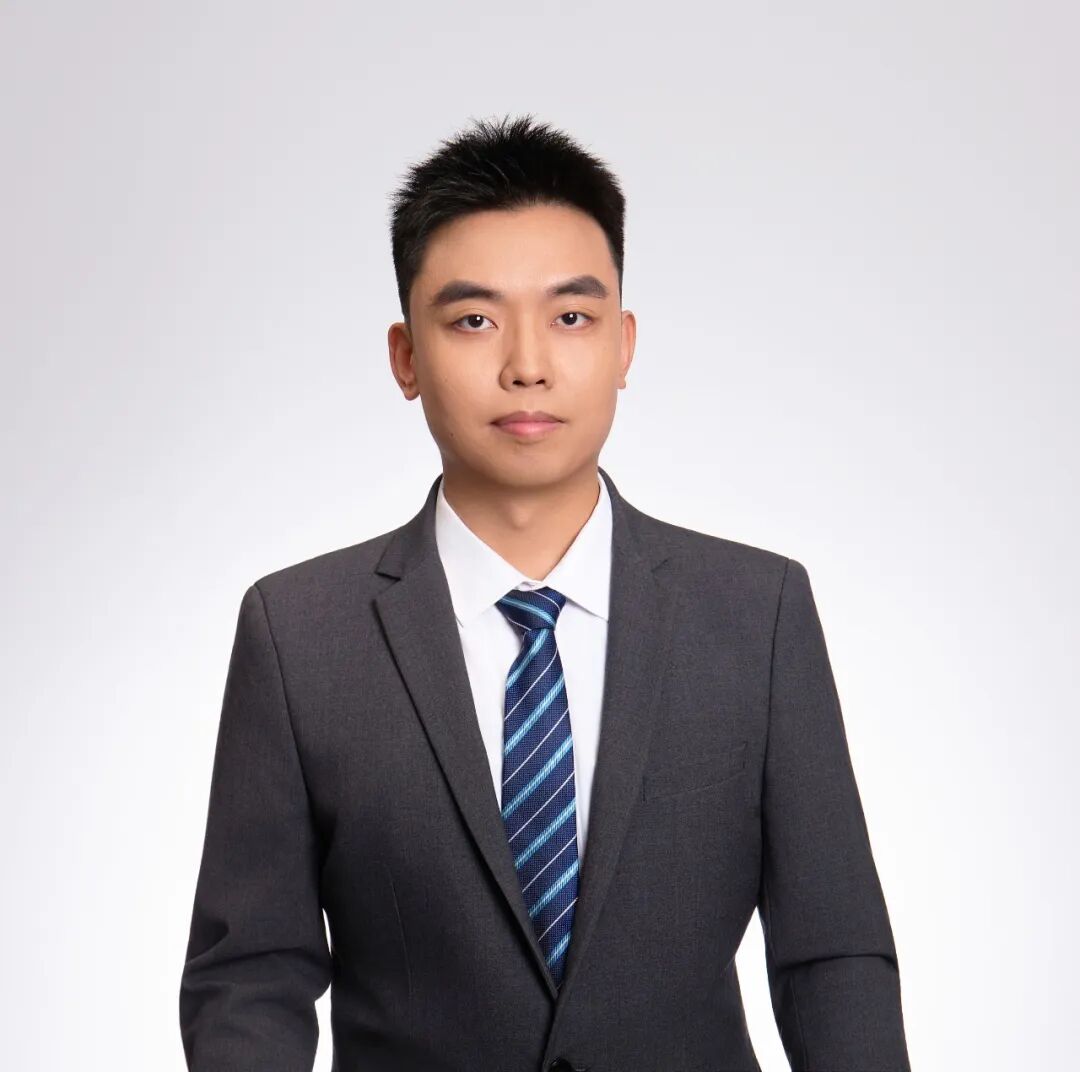
Liqing Intelligence, a new startup in the Physical AI sector, has secured several hundred million yuan in seed funding just two months after its establishment in April 2026. The company is backed by Tsinghua University's AI faculty, led by assistant professor Li Yiming, a former NVIDIA Vision & Robotics researcher. Li Yiming emphasizes that 'world models' are merely a component, not the ultimate goal, likening them to a 'horse carrying the lychees' in a historical anecdote. The true objective is to solve real-world problems by building comprehensive systems that integrate data collection, model development, and hardware deployment. Liqing Intelligence's approach focuses on a data and physics-driven infrastructure, featuring a data pipeline to scale data collection to millions or tens of millions of hours and a physics engine enabling a 'Real-to-Sim-Real' loop for robot reinforcement learning. This infrastructure supports fine-grained manipulation tasks and can be deployed across various robotic platforms and industries, including manufacturing, retail, and healthcare. The company aims to provide integrated hardware and software solutions that solve problems across different embodiments and scenarios. Investors in the seed round include prominent venture capital firms like IDG Capital, Sequoia China, and Hillhouse Capital, as well as industrial capital from companies like Zhaoyuan Robot and Lingxin Qiaoshou. Li Yiming believes that the scarcity of talent with integrated hardware and software expertise, coupled with the company's full-stack, self-developed approach, makes Liqing Intelligence a unique player in the field. The company plans to release a world model for cross-B-end scenarios by the end of 2026 and achieve scaled solutions by 2028.
The substantial seed funding for Liqing Intelligence highlights a significant market interest in integrated Physical AI solutions, moving beyond the hype surrounding 'world models' as standalone entities. The company's strategy of developing a full-stack infrastructure, from data collection to physics-informed simulation and deployment, addresses a critical need for robust, generalizable robotic systems. This approach acknowledges that true AI advancement in the physical domain requires not just sophisticated models but also the underlying systems to train, validate, and deploy them effectively. The emphasis on a 'Real-to-Sim-Real' loop and leveraging physics principles suggests a pragmatic path to overcoming data limitations and achieving reliable real-world performance. As the AI era matures, companies that can bridge the gap between simulation and physical reality with end-to-end solutions are likely to capture significant market share, driving the next wave of automation and intelligent systems.
AI-generated to prompt reflection — not editorial opinion, not advice, not a statement of fact. How this works.