Turkey: Navigating Between Atatürk's Legacy and Erdoğan's Vision
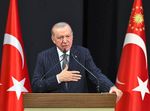
The article explores how Turkish President Recep Tayyip Erdoğan is forging a new national identity by integrating religion, nationalism, and historical narratives. This approach contrasts with the secular, modernizing legacy established by Mustafa Kemal Atatürk, the founder of the Republic of Turkey. Erdoğan's strategy aims to redefine Turkey's self-perception in the contemporary world.
By emphasizing religious values and a particular interpretation of national history, Erdoğan seeks to resonate with a significant portion of the Turkish populace. This political maneuver involves leveraging historical figures and events to bolster a sense of national pride and religious continuity. The dynamic between Atatürk's foundational principles and Erdoğan's current policies highlights a significant ideological shift within Turkey.
The interplay between these two distinct visions—one rooted in secularism and Westernization, the other in a more religiously infused nationalism—shapes the ongoing discourse on Turkish identity. The article suggests that Erdoğan's leadership is actively attempting to reshape the nation's historical consciousness and its place in the global arena.
President Erdoğan's strategy of synthesizing religious sentiment, nationalist fervor, and historical narratives represents a deliberate effort to reorient Turkey's national identity. This approach challenges the secularist foundations laid by Atatürk, potentially creating internal societal divisions and influencing Turkey's geopolitical positioning. The long-term implications of this ideological recalibration warrant close observation, particularly concerning its impact on democratic institutions, minority rights, and Turkey's relationship with Western allies. Future developments may reveal whether this synthesis fosters national unity or exacerbates existing societal fault lines, impacting Turkey's trajectory in the coming decade.
AI-generated to prompt reflection — not editorial opinion, not advice, not a statement of fact. How this works.