Turkey's Role as an Israeli Rival: A Strategic Comparison with Iran
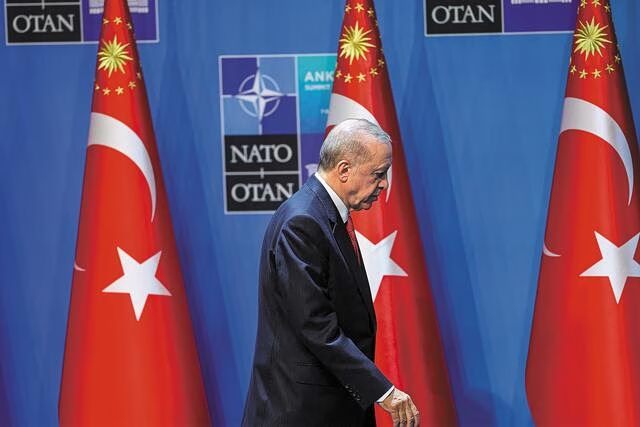
Turkey cannot fully replace Iran as a strategic adversary for Israel in the Middle East. From an Israeli strategic perspective, there are currently two distinct competitors. Iran is still considered the primary military and nuclear threat, possessing a network of allies and armed organizations such as Hezbollah and other pro-Iranian groups, alongside its ballistic missile programs. While Turkey engages in regional dynamics and has its own strategic interests, it does not present the same level of existential military or nuclear challenge that Iran poses. Israel's strategic calculus differentiates between the nature and scale of threats posed by these two nations. Iran's multifaceted approach, including its proxy network and nuclear ambitions, positions it as a unique and paramount concern for Israeli security. Turkey's regional influence and actions are viewed through a different lens, not equating to the direct strategic threat profile of Iran. This distinction is crucial for understanding Israel's foreign policy and defense planning in the complex geopolitical landscape of the Middle East.
This analysis differentiates between two regional powers, Iran and Turkey, from Israel's strategic viewpoint. It frames Iran as the principal military and nuclear threat due to its proxy networks, armed groups like Hezbollah, and ballistic missile programs. Turkey, while a regional actor, is assessed as not posing a comparable existential threat. This perspective highlights how national security strategies often involve a tiered assessment of adversaries based on specific capabilities and intentions. Understanding these distinctions is key to navigating the complex geopolitical alliances and rivalries shaping the Middle East, particularly in the context of nuclear proliferation concerns and the influence of non-state actors.
AI-generated to prompt reflection — not editorial opinion, not advice, not a statement of fact. How this works.