Turkey's S-400 Sales and F-35 Deal Shift Regional Balance, Greek Newspaper Reports
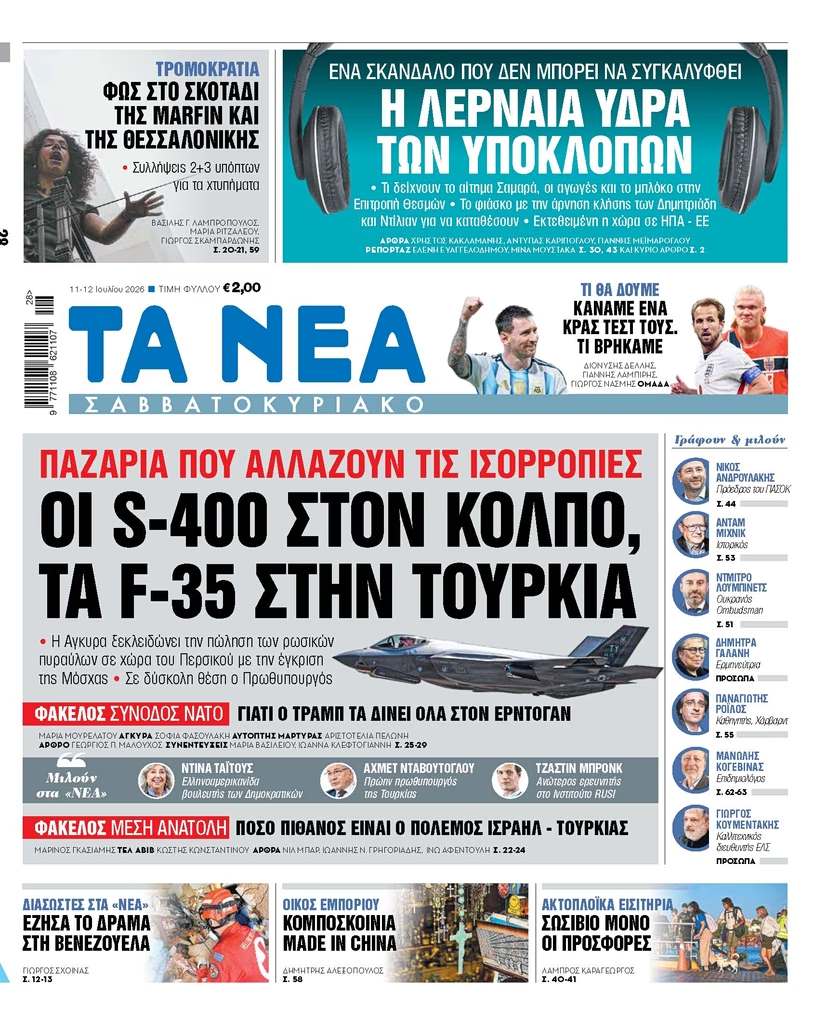
The Greek newspaper 'Ta Nea Savvatokyriako' reports on significant geopolitical negotiations that are altering regional power dynamics. According to the publication, Ankara is moving forward with the sale of Russian S-400 missile systems to a Persian Gulf nation, a move that has reportedly received approval from Moscow. This development places the Greek Prime Minister in a challenging position, as these arms deals have implications for international relations and security alliances. The newspaper also delves into the upcoming NATO summit, exploring the reasons behind President Trump's apparent concessions to Turkish President Erdoğan. Furthermore, the publication examines the complex situation in the Middle East, questioning the extent of certain agreements and their potential impact. The article suggests that these 'bargains' are not merely transactional but are actively reshaping the strategic landscape, with potential consequences for NATO's cohesion and the broader security architecture in the Eastern Mediterranean and Middle East.
The reported sale of Russian S-400 systems by Turkey to a Persian Gulf state, contingent on Moscow's approval, signifies a complex interplay of national security interests, geopolitical alliances, and economic considerations. This transaction, if finalized, could challenge existing defense procurement norms and potentially impact the strategic calculus of various regional and global powers. The situation highlights the evolving dynamics within NATO, where member states pursue independent defense strategies that may diverge from collective security objectives. The involvement of the US and its stance towards Turkey's defense acquisitions, particularly concerning F-35 aircraft, underscores the intricate balance of power and the leverage employed in international relations. This event prompts consideration of how such dual-use military technologies and strategic partnerships can either enhance or complicate regional stability and the long-term trajectory of international security frameworks.
AI-generated to prompt reflection — not editorial opinion, not advice, not a statement of fact. How this works.