Turks beach privatization sparks protests as public access dwindles
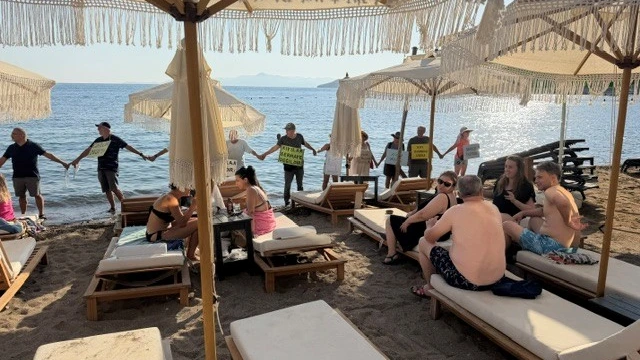
In several Turkish coastal towns, access to public beaches is becoming increasingly restricted due to extensive construction by hospitality businesses. These businesses, including beach clubs and restaurants, are erecting piers, terraces, and rows of sunbeds, effectively occupying large portions of the coastline. While entrepreneurs claim municipal permission and argue these developments benefit tourism, many residents describe it as an illegal occupation, citing Turkish law that mandates free public access to beaches. Residents in Bodrum, on the Aegean coast, report being turned away from beaches and told they must rent sunbeds, with prices often becoming unaffordable due to high inflation, with one example citing 28 euros per person. A recent viral video from Mersin showed a beach club employee throwing sand on sunbathers' towels to drive them away, leading to the employee's arrest. Activists like Nihat Koyuncu in Bodrum have been campaigning for three years, highlighting that what was once a 1.5-kilometer stretch of public beach has shrunk to approximately 300 meters, with the rest occupied by commercial establishments. Despite these issues, the Turkish Ministry of Culture announced plans to expand the number of public beaches to 23 this year, and many municipal beaches reportedly hold Blue Flag status. Legally, the Turkish Supreme Court has reaffirmed that the coastline is public property with a right to access. Recently, a business owner was convicted for turning away a family from a public beach for lying on towels. However, residents remain concerned about the slow erosion of free access and inadequate government enforcement, with fines allegedly becoming a form of "disguised rental system" as illegal structures are not removed promptly. Protesters, like Tulay, who has lived in Bodrum since 2006, are demanding that elected officials protect their interests and are calling for the return of amenities like lifeguards, showers, and toilets that have disappeared from public areas. The movement continues, with some entrepreneurs reportedly deciding to stop placing sunbeds on public beaches, as activists vow to continue their fight for universal and free access to the sea, emphasizing that it should remain a right, not a luxury.
The privatization and commercialization of public beaches in Turkey highlight a growing tension between economic development, tourism revenue, and the fundamental right to public access. While businesses cite municipal permits and tourism benefits, the narrative of "occupation" and unaffordability for locals suggests a potential misalignment between private enterprise incentives and public welfare. The legal framework appears to support public access, yet enforcement challenges and the alleged circumvention of penalties indicate systemic governance gaps. This situation prompts consideration of how to balance private investment in coastal infrastructure with the preservation of natural resources as public commons, particularly in the context of rising inflation and the increasing commodification of leisure. Future policy may need to address clearer zoning, more robust oversight mechanisms, and equitable revenue-sharing models to ensure coastal access remains a right for all citizens, not a privilege dictated by market forces.
AI-generated to prompt reflection — not editorial opinion, not advice, not a statement of fact. How this works.
