Twentekanaal Canal Closed to Shipping Due to Drought
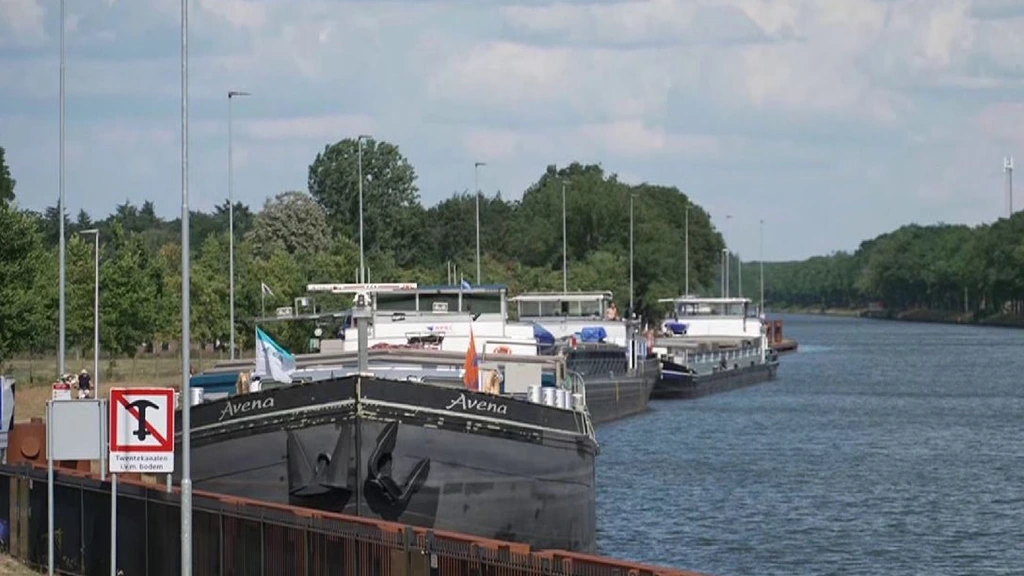
Due to persistent drought, the locks at Eefde, which provide access to the Twentekanaal canal, will be closed to shipping starting tomorrow afternoon. Additionally, water extraction from the Twentekanaal for crop irrigation is immediately prohibited. These measures are being implemented to prevent irreparable damage to water defenses, the soil, and the natural environment. On the Almelo-De Haandrik section, a branch of the Twentekanaal, the water level must be at least 9.10 meters NAP. This level is in danger of falling below the minimum, which could cause the quay, serving as a water defense, to subside. All available water is currently being used to maintain the required level. To avoid further water loss through lock operations, the locks will be closed. Previous attempts to maintain the water level using pumps and limited lock usage proved insufficient. The restrictions will remain in effect until the water level at Eefde is restored. The canal closure will begin tomorrow at 12:00 PM, according to RTV Oost. A water extraction ban will also be enforced in Ooijpolder and Groesbeek starting tomorrow, as reported by Waterschap Rivierenland, affecting areas east and southeast of Nijmegen.
The closure of the Twentekanaal and the associated water extraction ban highlight the increasing vulnerability of critical infrastructure and agricultural practices to climate-induced water scarcity. This event underscores a systemic challenge: the reliance on a fixed water level for navigation and land management, which is directly threatened by prolonged dry periods. The decision to prioritize maintaining water levels over shipping and irrigation reflects a shift in resource allocation, driven by the immediate need to protect essential infrastructure like water defenses. Looking ahead, such measures may become more frequent, necessitating a strategic re-evaluation of water management policies, potentially involving investments in water storage, more efficient irrigation technologies, and adaptive navigation protocols to build resilience against future droughts in the coming decade.
AI-generated to prompt reflection — not editorial opinion, not advice, not a statement of fact. How this works.