Two Dead as College Wall Collapses on Queue for Discounted Goods in Dhaka
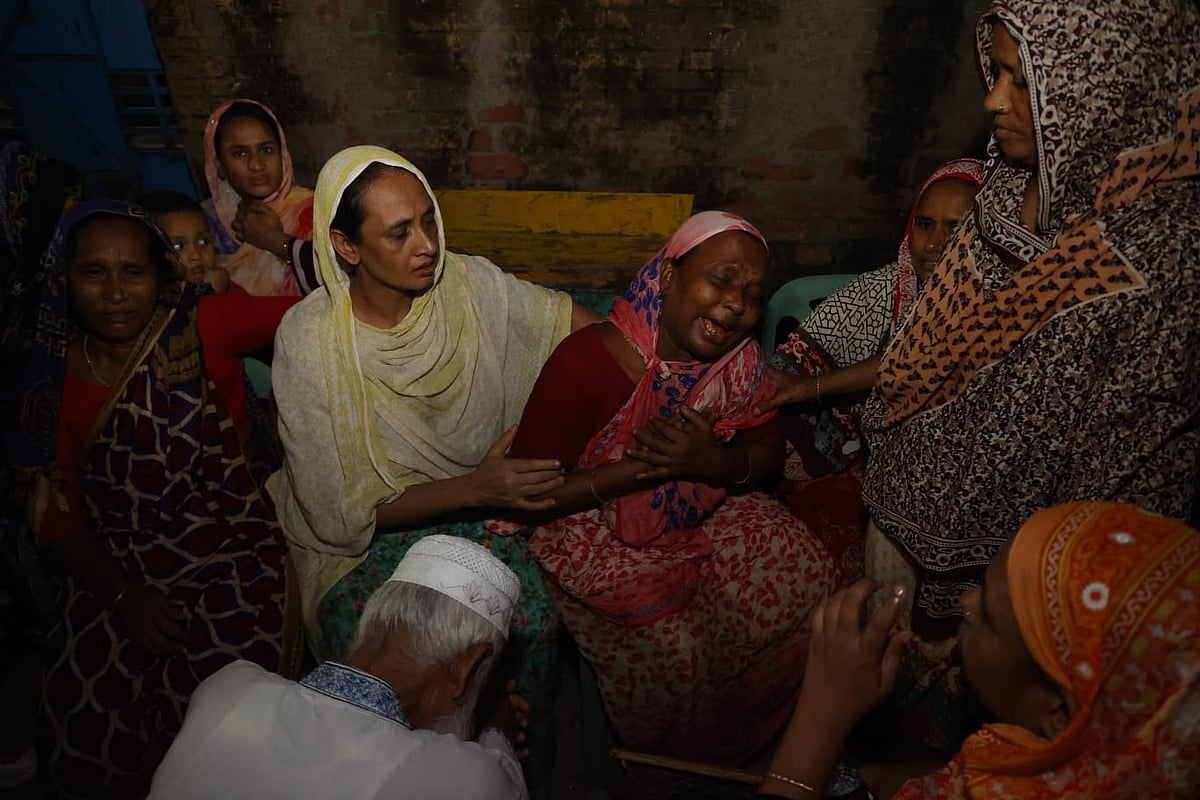
A tragic incident occurred in Dhaka's Mirpur area on Tuesday when a wall of Mirpur University College collapsed, killing two people and injuring at least eight others. The victims were standing in a queue to purchase goods from the Trading Corporation of Bangladesh (TCB), which offers subsidized essential commodities. Nasima Begum, 44, who worked as a cleaner at USEP Mirpur Technical School, was among the deceased. Her salary was insufficient to cover her daughter's education and household expenses, prompting her to seek savings through TCB products. The other victim was identified as Md. Firoz, 43, a resident of Shah Ali Bagh in Mirpur. Nasima Begum, originally from Morelganj in Bagerhat district, lived in Mirpur Janata Housing area. Her son confirmed that his mother's body would be taken to their ancestral village for burial. The wall collapsed around 1:30 PM, crushing several individuals in the TCB queue. The incident took place behind Mirpur University College, a location where TCB products are regularly sold at lower prices, attracting low-income individuals. Eight injured individuals were admitted to various hospitals. Three of the injured receiving treatment at Dhaka Medical College Hospital were identified as Razia Begum, 55, Monowara Begum, 37, and Mosharraf Hossain, 19. Razia Begum's daughter stated her mother had gone to the market but diverted to the TCB queue when she saw the truck. Fire service officials noted that the collapsed wall, constructed solely of bricks without beams or columns, appeared to be very old and may have fallen due to rain. An investigation is underway to determine the wall's structural integrity and the exact cause of the collapse.
The collapse of the college wall highlights a critical intersection of urban infrastructure vulnerability and socioeconomic pressure. The event underscores the systemic challenges faced by low-income populations who rely on subsidized goods, often necessitating long waits in potentially unsafe public spaces. The lack of structural integrity in the wall, described as having no beams or columns, points to potential lapses in municipal oversight and maintenance of public and institutional property. While rain may have been a contributing factor, the fundamental issue appears to be inadequate construction and upkeep. This incident serves as a stark reminder of how everyday needs can expose individuals to unforeseen risks when public safety standards are not rigorously enforced, particularly in densely populated urban environments. Future urban planning must prioritize robust infrastructure and safety protocols, especially in areas frequented by vulnerable populations seeking essential services.
AI-generated to prompt reflection — not editorial opinion, not advice, not a statement of fact. How this works.