Two Dead, Four Injured in Head-On Collision on BR-116 in Cabrobó
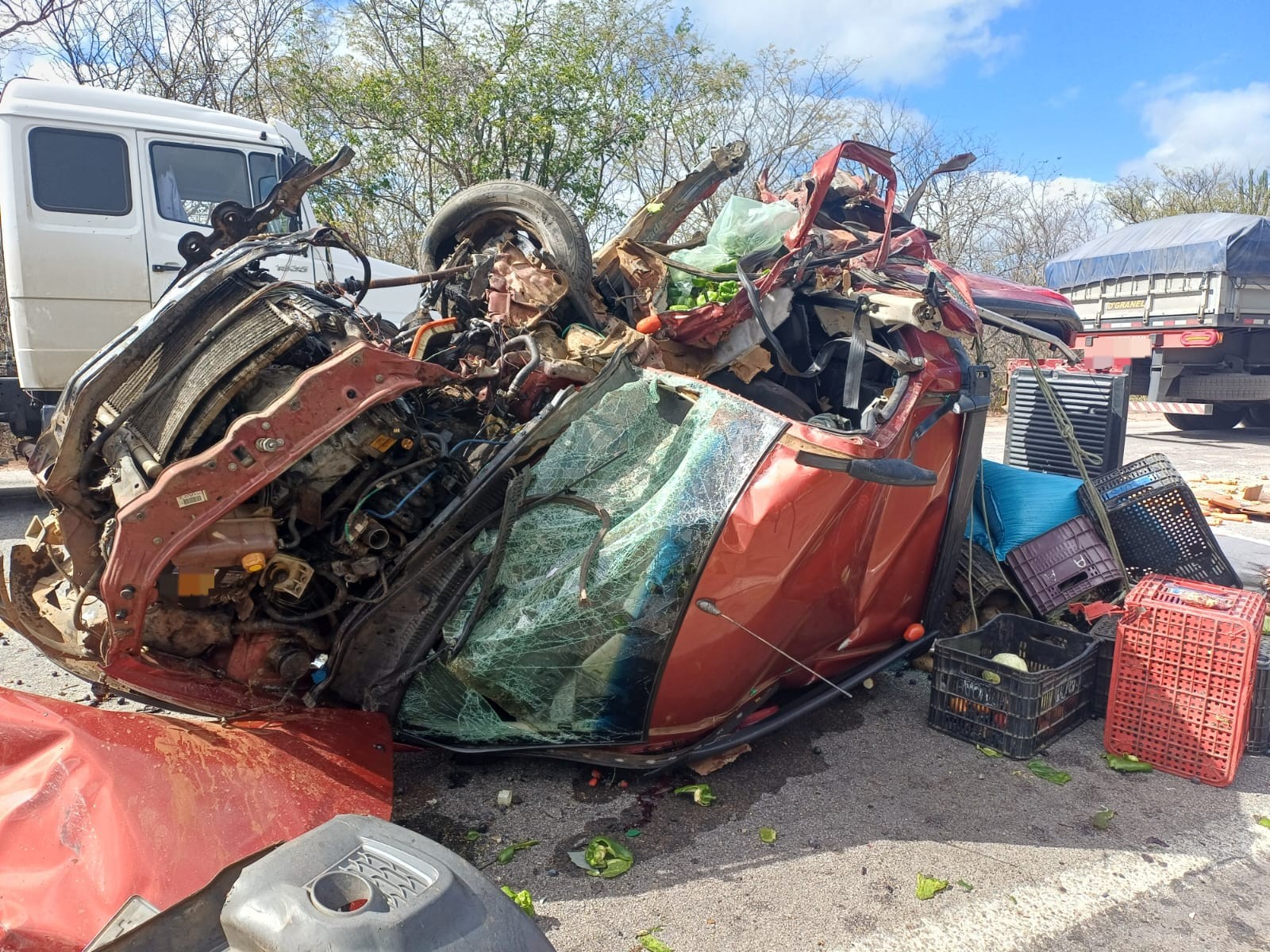
A head-on collision between a pickup truck and a utility vehicle on Saturday, May 4th, resulted in two fatalities and four injuries. The accident occurred at kilometer 66.9 of the BR-116 highway in Cabrobó, located in the Sertão region of Pernambuco, Brazil.
According to the Federal Highway Police (PRF), the collision involved a Strada pickup truck and an HR-V utility vehicle. Authorities suspect the HR-V veered into the oncoming lane. The two passengers in the Strada, a 55-year-old woman and an unidentified man, died at the scene. The driver of the Strada sustained minor injuries, did not require hospitalization, and passed a breathalyzer test with normal results.
The HR-V carried a couple and two children, aged 2 and 11. All four occupants were injured and transported to the Regional Hospital of Salgueiro. The driver of the HR-V also passed a breathalyzer test with normal results. The PRF managed traffic at the scene while awaiting the arrival of the Institute of Forensic Science and the Institute of Legal Medicine. The Civil Police will investigate the accident's cause.
This tragic incident highlights the persistent challenges in road safety, particularly concerning lane discipline and driver attention on major highways like the BR-116. While initial breathalyzer tests showed no alcohol impairment for either driver, the suspected cause of the HR-V entering the wrong lane warrants thorough investigation into potential factors such as driver distraction, fatigue, or a sudden medical event. The presence of young children among the injured underscores the vulnerability of passengers in such collisions. Moving forward, enhanced traffic enforcement, public awareness campaigns focusing on the dangers of lane departures, and potentially improved road infrastructure or technology to detect and prevent vehicles from entering wrong-way lanes could mitigate future risks. The investigation by the Civil Police will be crucial in determining the precise sequence of events and informing preventative measures.
AI-generated to prompt reflection — not editorial opinion, not advice, not a statement of fact. How this works.