Two Eclipses in 16 Days: Will India Observe Sutak Period?
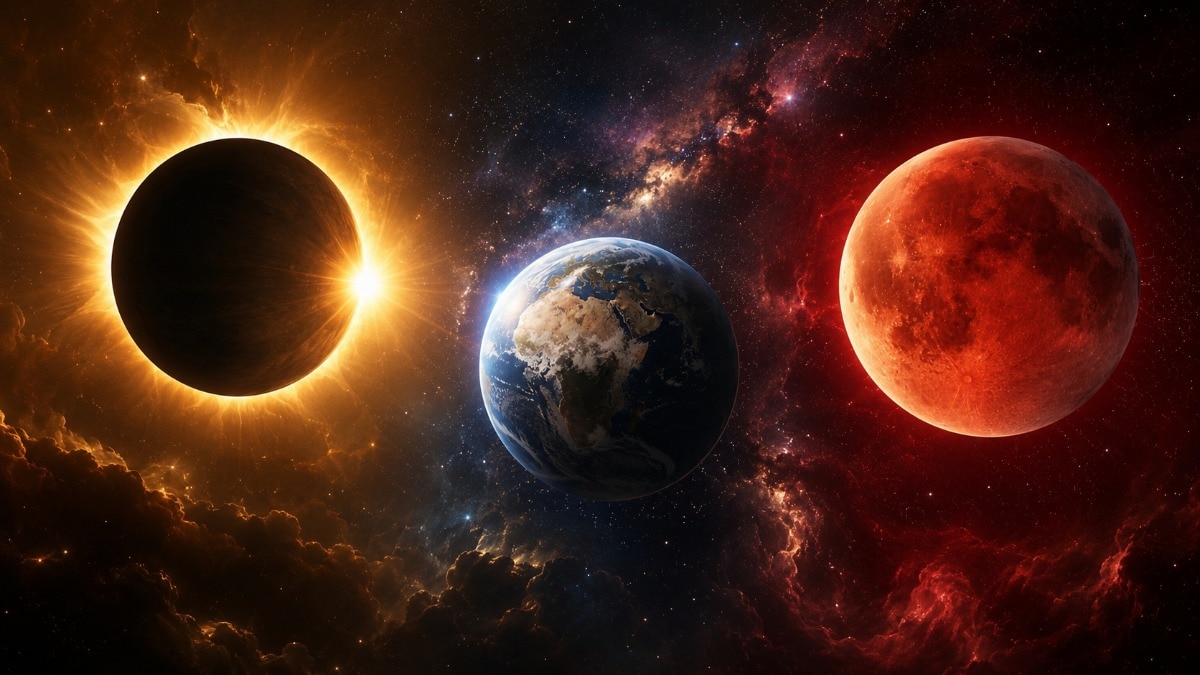
A significant celestial event is set to occur in the months of Shravan and August 2026, with two eclipses scheduled within a 16-day period. These events include a solar eclipse and a lunar eclipse. The primary question arising from this astronomical occurrence is whether these eclipses will be visible in India. The timing and visibility of eclipses are crucial for determining the observance of 'Sutak Kal,' a period of impurity considered significant in Hindu traditions. The proximity of these two eclipses raises questions about their potential impact and the associated rituals or observances in India. Further details regarding the exact dates and times of these eclipses will be necessary to ascertain their visibility and the subsequent implications for the country.
The upcoming dual eclipse event in August 2026 presents an opportunity to examine the intersection of astronomical phenomena and cultural observances. From a scientific perspective, eclipses are predictable celestial mechanics. The 'Sutak Kal' concept reflects a cultural framework for interpreting these events, highlighting the human tendency to seek meaning and structure around natural occurrences. This juxtaposition invites reflection on how societies integrate scientific understanding with traditional beliefs. As astronomical predictions become more precise, the focus shifts to the societal and psychological responses to these events, particularly in regions with established astrological or religious frameworks. Understanding these dynamics can offer insights into cultural resilience and adaptation in the face of predictable, yet awe-inspiring, natural phenomena.
AI-generated to prompt reflection — not editorial opinion, not advice, not a statement of fact. How this works.