Typhoon Bavi Hits China, Causing Floods and Damage After Evacuations
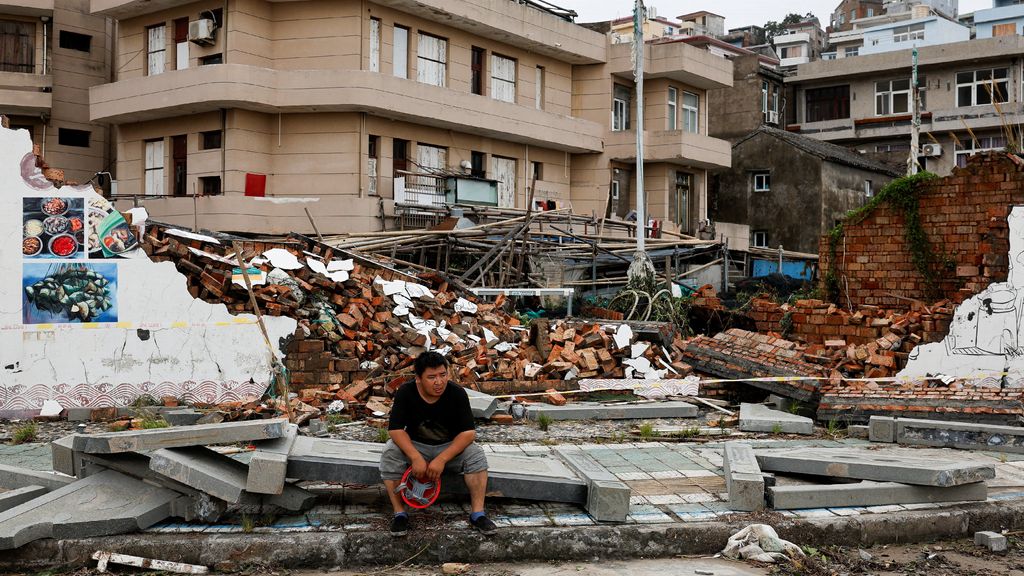
Typhoon Bavi made landfall in eastern China, bringing heavy rain and strong winds to the coastal province of Zhejiang. Nearly 2 million people had been evacuated prior to the storm's arrival. Bavi made landfall near the coastal city of Yuhuan around 11:20 PM local time on Saturday and moved towards the area of Wenzhou. Although weakened to a tropical storm, Bavi remained dangerous due to intense rainfall. In Yueqing, a coastal city near Wenzhou, over 1300 trees were toppled and more than 700 were uprooted, according to Chinese state broadcaster CCTV. Emergency services used heavy machinery and chainsaws to clear debris from flooded streets. A landslide was also reported in the northern part of the city, with large boulders blocking a mountain road. Residents described powerful winds that dislodged roof tiles and branches, and unprecedented water levels in local canals. Taiwan also experienced severe weather, with 134 injuries reported, primarily from falls and impacts with falling objects. No fatalities were reported in Taiwan. The storm disrupted transportation significantly, leading to the cancellation of 137 international and 62 domestic flights. In China, two major train stations in Hangzhou were temporarily closed, and Hangzhou Xiaoshan Airport canceled 327 flights. Shanghai saw 1620 train services and 684 flights canceled. Meteorologists warn that parts of China could receive hundreds of millimeters of rain in the coming days, maintaining the risk of further flooding and landslides.
The impact of Typhoon Bavi highlights the ongoing challenges faced by coastal regions in managing extreme weather events exacerbated by climate change. The extensive evacuations and infrastructure damage underscore the critical need for robust disaster preparedness and resilient urban planning. As meteorological forecasts predict continued heavy rainfall, the persistent risk of flooding and landslides points to systemic vulnerabilities in land use and water management systems. Future resilience will depend on integrating advanced early warning systems with effective land-use policies and infrastructure upgrades capable of withstanding increasingly severe weather patterns, ensuring the safety and stability of communities in the face of environmental shifts.
AI-generated to prompt reflection — not editorial opinion, not advice, not a statement of fact. How this works.