Typhoon Bavi Prompts Massive Evacuations in Eastern China
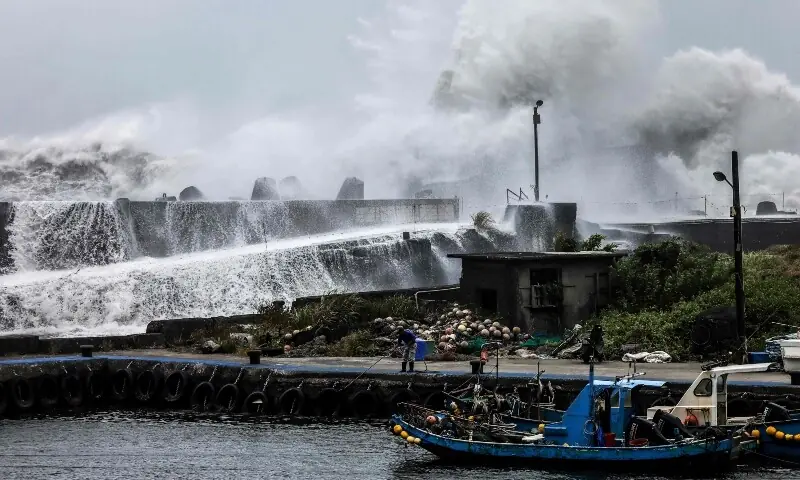
Over 600,000 people were evacuated from China's eastern coastal provinces of Zhejiang and Fujian on Saturday as Typhoon Bavi approached. The major city of Wenzhou, in Zhejiang, with a population of 10 million, was bracing for landfall in the early hours of Sunday. While the typhoon was weakening over cooler seas, its large size and high moisture content posed a significant risk. Residents expressed a mix of concern and confidence, citing previous experiences with typhoons and assurances of adequate supplies.
Typhoon Bavi had previously brought heavy rain and strong winds to Japan's southern Sakishima islands and brushed past northern Taiwan. In Taiwan, over 14,000 people were evacuated from mountainous areas, and flights were significantly disrupted, with 920 international and 280 domestic flights cancelled. Although Taiwan and Japan reported no deaths directly attributed to Bavi, the typhoon's impact exacerbated a southwest monsoon in the Philippines, leading to 17 fatalities there. Despite the approaching storm, some residents in Wenzhou and Taipei continued with daily activities, though authorities implemented significant precautions.
Typhoon Bavi's approach highlights the ongoing challenge of managing extreme weather events in densely populated coastal regions. The scale of evacuations, exceeding 600,000 people, underscores the critical need for robust disaster preparedness infrastructure and effective public communication strategies. While government actions mitigate immediate risks, the event also prompts reflection on long-term urban planning and climate resilience in the face of intensifying weather patterns. Future preparedness will likely involve integrating advanced meteorological forecasting with real-time community engagement and adaptive infrastructure to minimize disruption and ensure safety.
AI-generated to prompt reflection — not editorial opinion, not advice, not a statement of fact. How this works.