UAE seeks to bypass Strait of Hormuz for its vital trade routes
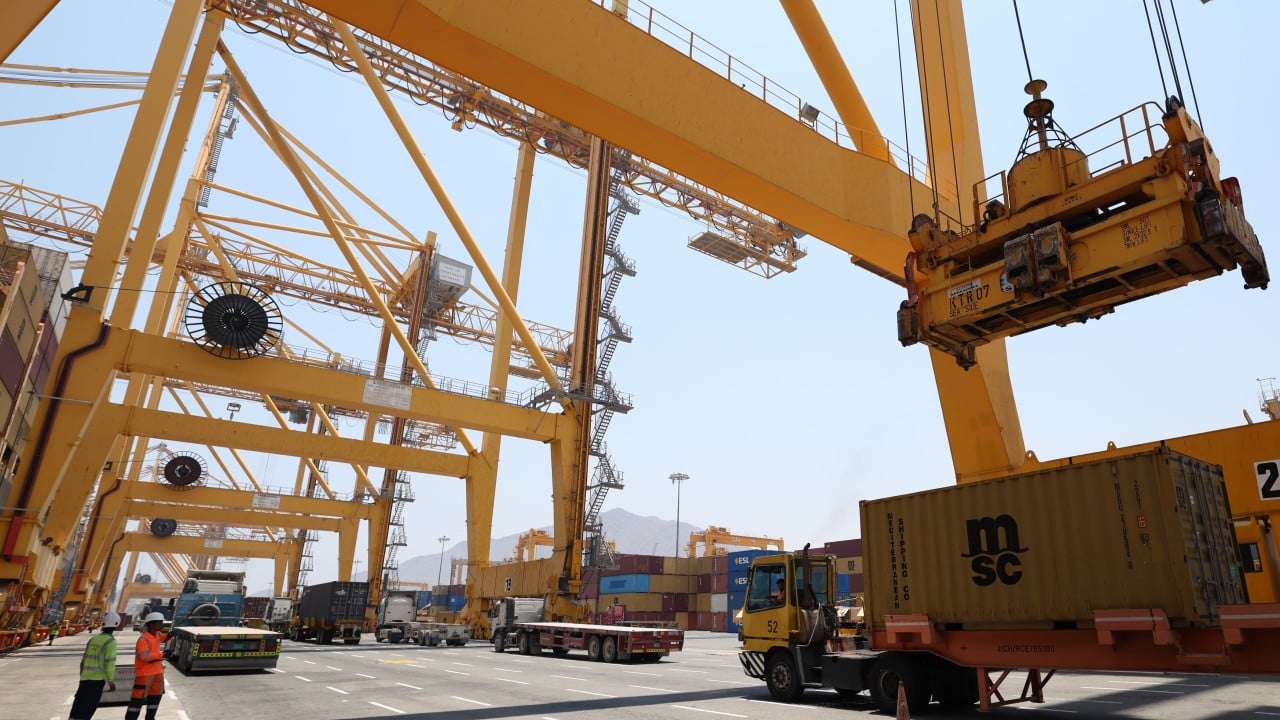
The United Arab Emirates faces a significant geographical challenge as it aims to eliminate its reliance on the Strait of Hormuz, a critical maritime chokepoint. Its two main economic engines, Jebel Ali and Khalifa ports, are located within this very strait. These ports are responsible for managing the majority of the UAE's annual non-oil trade, valued at approximately US$1 trillion. A substantial portion of this trade is directed towards and originates from Asia. Collectively, these ports serve as the linchpin for a crucial logistics network that connects Singapore to Europe. The UAE's objective is to reduce its dependence on the Strait of Hormuz to zero, despite the strategic importance of its major ports situated within it. This initiative highlights the tension between national security goals and economic realities.
The UAE's strategic imperative to diversify trade routes away from the Strait of Hormuz reflects a broader global trend of seeking supply chain resilience in the face of geopolitical uncertainties. While the nation's economic prosperity is currently tied to ports within this sensitive waterway, the long-term vision likely involves leveraging alternative infrastructure and bilateral agreements to mitigate risks. This endeavor presents a complex balancing act between maintaining current trade flows, which are essential for its US$1 trillion non-oil economy, and investing in future-proof logistics that can withstand potential disruptions. The success of this strategy will depend on the development of robust alternative corridors and the willingness of regional and international partners to support these new trade pathways, potentially reshaping global logistics networks over the next decade.
AI-generated to prompt reflection — not editorial opinion, not advice, not a statement of fact. How this works.