Uberlândia Confirms Yellow Fever in Dead Monkey
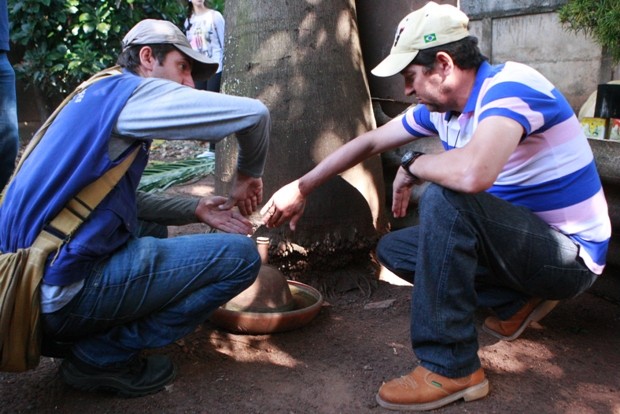
Uberlândia, Brazil, has confirmed a case of yellow fever in a monkey found dead in the city, according to the Municipal Health Secretariat. The confirmation was announced on Friday, May 10th. While the exact location and date of the animal's discovery were not specified, the case had been under observation by the municipal health network. Laboratory tests conducted by the Ezequiel Dias Foundation (Funed) confirmed the presence of the yellow fever virus. The prefecture stated that preventive measures, as recommended by the Regional Health Superintendence, were already in place before the confirmation. These actions include actively seeking unvaccinated individuals or those with incomplete vaccination schedules and intensifying yellow fever vaccinations. In 2018, Uberlândia experienced a similar situation with five other dead monkeys found after the first positive yellow fever diagnosis in primates in the city. The Ministry of Health clarifies that monkeys do not transmit yellow fever to humans; they are also victims of the disease. Transmission occurs through the bite of infected mosquitoes, and dead monkeys serve as an alert for the virus's circulation in an area, prompting health authorities to implement preventive measures and reinforce vaccination campaigns. The Municipal Health Secretariat reported that the municipality is managing diseases transmitted by the Aedes aegypti mosquito, such as dengue, chikungunya, yellow fever, and zika, using targeted fumigation when necessary.
The confirmation of yellow fever in a dead monkey in Uberlândia serves as a biological indicator of viral circulation, prompting public health responses focused on vaccination and mosquito control. While monkeys are not vectors, their susceptibility highlights the risk to human populations through mosquito transmission. The municipality's proactive stance on vaccination and vector control, even prior to confirmation, reflects established public health protocols for arboviral diseases. Moving forward, sustained surveillance and community engagement in vaccination efforts will be crucial in mitigating potential outbreaks, particularly given the known proliferation of Aedes aegypti mosquitoes during rainy seasons. Future strategies may benefit from integrated approaches that combine environmental management with enhanced public awareness campaigns to address the systemic challenges of vector-borne disease prevention in urbanizing environments.
AI-generated to prompt reflection — not editorial opinion, not advice, not a statement of fact. How this works.