Uberlândia Implements Fines for Truck Traffic Violations on Urban Highways
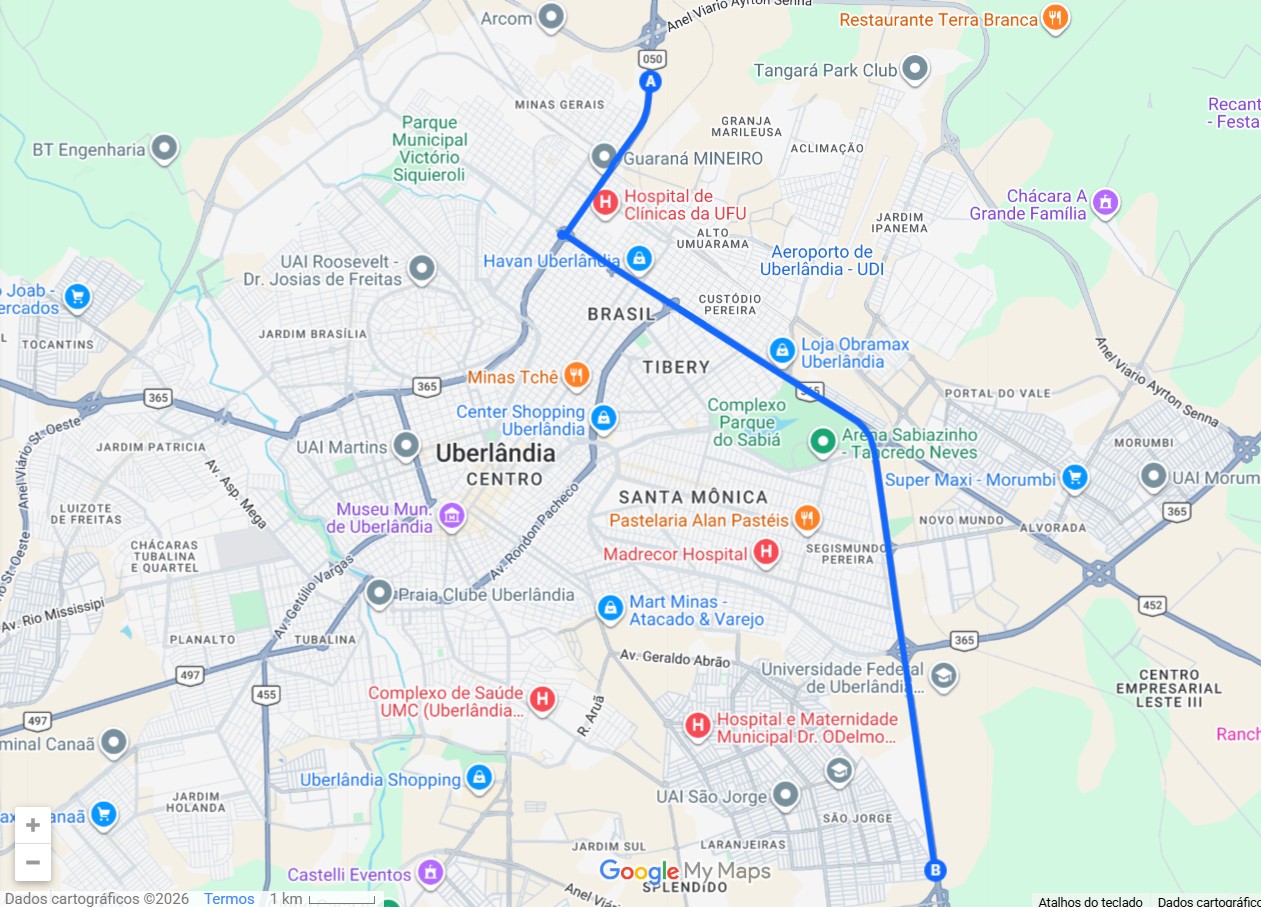
Starting Thursday, May 9th, Uberlândia, Brazil, will begin issuing fines to heavy vehicles that violate circulation restrictions on sections of highways BR-050 and BR-365 within the city's urban perimeter. These limitations have been in effect since June 8th, following their publication by the National Department of Transport Infrastructure (DNIT). The primary goals of this measure are to reduce accidents, improve traffic flow, and enhance road safety in identified critical areas. For the initial 30 days, enforcement was educational, with drivers receiving guidance rather than penalties. After this period, non-compliance is now classified as a traffic infraction under the Brazilian Traffic Code. The decision to restrict heavy vehicle traffic on these two specific highway sections stemmed from a May meeting in Uberlândia. This meeting included representatives from the Federal Public Ministry (MPF), Federal Highway Police (PRF), DNIT, the Minas Gerais State Highway Department (DER-MG), the Uberlândia City Hall, and civil society organizations, all recognizing the need to decrease accident rates and improve traffic fluidity. Trucks with a Combined Gross Vehicle Weight (PBTC) exceeding 23 tons are prohibited on both directions of BR-050 between km 68.9 and 77.2 during peak hours: 6:30 AM to 9:00 AM, 11:30 AM to 1:30 PM, and 5:00 PM to 7:30 PM. On BR-365, between km 610.8 and 614.7, the restriction for these heavy vehicles is in effect 24 hours a day, seven days a week. DNIT suggests alternative routes, including the Ayrton Senna Ring Road and sections of BR-050 and BR-365 outside the restricted zones, to facilitate truck movements. The measure is based on technical studies and PRF data highlighting a high number of accidents, frequent congestion, conflicts between urban and highway traffic, and the direct impact of heavy truck circulation during peak times in these urban highway segments.
This traffic management initiative in Uberlândia addresses systemic issues arising from the integration of long-haul logistics with urban environments. By imposing restrictions and penalties, authorities aim to mitigate negative externalities such as congestion and accidents, which are often exacerbated by the sheer volume and weight of commercial vehicles during peak urban activity. The phased implementation, from education to enforcement, reflects a common approach to behavioral change in regulated systems. Looking ahead, such measures highlight the ongoing challenge for urban planners and infrastructure departments globally to balance the essential economic function of freight transport with the safety and quality of life for city residents. The success of this policy will likely depend on the robustness of alternative routes and the long-term integration of smart city technologies for traffic monitoring and management, ensuring that logistical efficiency is maintained without compromising urban well-being.
AI-generated to prompt reflection — not editorial opinion, not advice, not a statement of fact. How this works.