UEFA Boycotts World Cup Bid Amid FIFA Sales Controversy
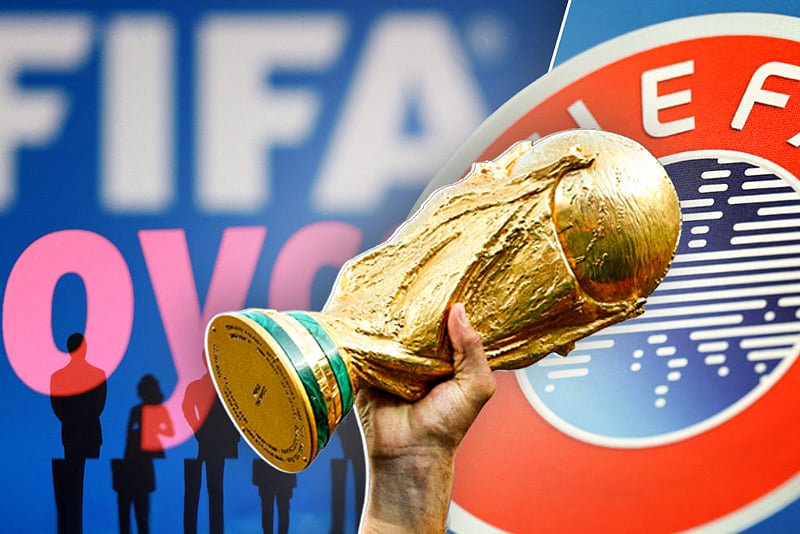
UEFA has announced a historic decision to boycott the upcoming World Cup bid process, with all 55 member nations participating in the withdrawal. This move comes as a direct protest against FIFA's controversial decision to sell the World Cup. The boycott by UEFA, a major governing body in world football, is expected to cripple the bidding process and create significant uncertainty. The situation is further complicated by opposition from CONCACAF, the confederation of North, Central American and Caribbean association football. This collective action by UEFA signals a deep division within the global football community regarding FIFA's commercial strategies and governance. The future of the 2030 World Cup, in particular, now faces extreme uncertainty due to these developments. The decision highlights a significant challenge to FIFA's authority and its approach to managing the sport's premier event. The impact of this boycott could reshape international football governance and future bidding processes.
FIFA's decision to sell the World Cup appears to have triggered a significant governance crisis, with UEFA's mass boycott representing a powerful challenge to established structures. This event underscores the tension between commercial revenue generation and the integrity of the sport's foundational principles. The collective action by UEFA suggests a potential shift in power dynamics within global football, where confederations may increasingly assert their influence to counter perceived overreach by FIFA. The long-term implications could involve a re-evaluation of FIFA's commercialization strategies and a push for greater transparency and stakeholder involvement in decision-making processes. This situation may also catalyze a broader discussion about the sustainability of current football economics and the potential for alternative governance models in the face of evolving global markets and fan expectations.
AI-generated to prompt reflection — not editorial opinion, not advice, not a statement of fact. How this works.