UFMT Opens Biodiversity Research Center in Cuiabá for Amazon, Cerrado, and Pantanal Biomes
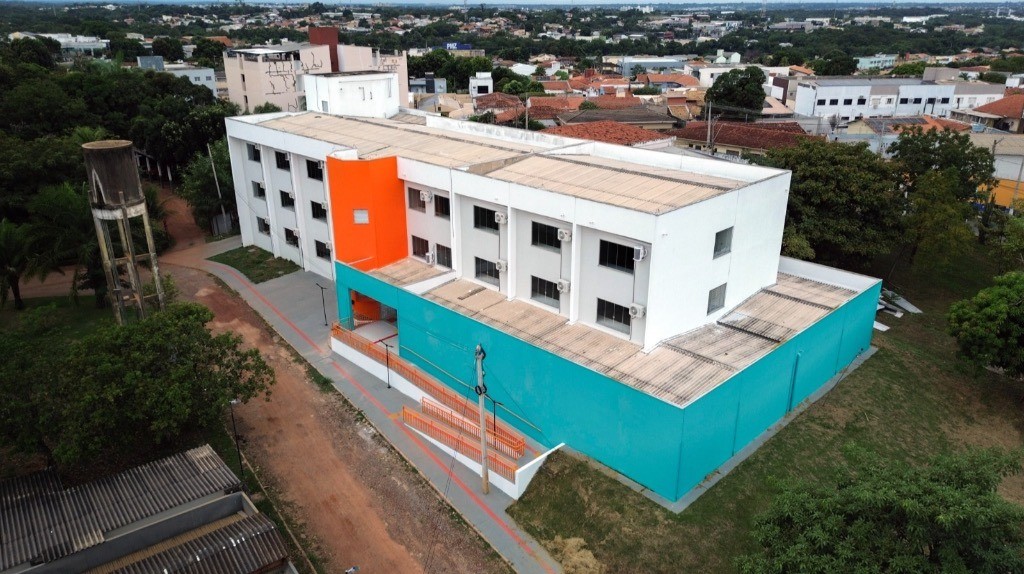
The Federal University of Mato Grosso (UFMT) has inaugurated its new Center for Research in Zoological Collections (CPCZ) in Cuiabá on Thursday, October 2nd. This state-of-the-art facility is dedicated to the study of biodiversity across three major Brazilian biomes: the Amazon, Cerrado, and Pantanal. The CPCZ will serve as a hub for research, teaching, and extension activities, consolidating scientific collections essential for understanding these vital ecosystems. The project's planning began in 2012 with initial funding from the Financier of Studies and Projects (Finep), followed by additional resources in 2015 to support infrastructure development. The executive project was finalized in 2017, and construction commenced in 2019. Spanning approximately 3,000 square meters, the center houses zoological collections, laboratories, an auditorium, technical areas, and multipurpose spaces. It will store diverse specimens, including invertebrates, fish, amphibians, reptiles, birds, mammals, and fossils. Notably, the center will host the Mato Grosso Entomological Collection Eurides Furtado (CEMT), established in 1987, which holds around 500,000 cataloged specimens and an additional six million awaiting scientific incorporation, including butterfly and moth specimens donated by the researcher's family. The CPCZ will also be home to the National Institute of Coleoptera (INCol), a CNPq-affiliated network coordinated by UFMT focused on beetle research. The paleontological collection, featuring about 430 specimens, primarily from the Crato Formation in Ceará, will also be housed here. These collections are crucial for undergraduate, graduate, and postdoctoral research, as well as collaborations with national and international institutions. The CPCZ will operate under the Research Pro-Rectorate (Propesq) with technical and scientific management overseen by the Institute of Biosciences.
The establishment of the Center for Research in Zoological Collections by UFMT represents a significant investment in preserving and studying Brazil's rich biodiversity, particularly across the Amazon, Cerrado, and Pantanal biomes. This initiative aligns with growing global recognition of the critical need for robust scientific infrastructure to monitor environmental changes and support conservation efforts. By consolidating diverse collections, including extensive entomological and paleontological archives, the center aims to foster interdisciplinary research and enhance educational opportunities. The long development timeline, from 2012 to its recent inauguration, highlights the complexities of securing funding and executing large-scale scientific projects in Brazil. Future success will likely depend on sustained funding, effective inter-institutional collaboration, and the center's ability to leverage its data for policy-relevant insights, particularly in the context of ongoing environmental pressures and the accelerating pace of the AI era's data-driven scientific discovery.
AI-generated to prompt reflection — not editorial opinion, not advice, not a statement of fact. How this works.