UFOs, US Government, and Hidden Truth: Legacy of 'Close Encounters'
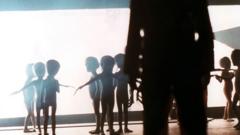
The 1977 Steven Spielberg classic film 'Close Encounters of the Third Kind' was inspired by concerns over the US government's alleged concealment of information regarding UFOs. This iconic film may offer insights into Spielberg's new movie, 'The Fabelmans'. The original film explored themes of government secrecy and the public's fascination with extraterrestrial phenomena. Its narrative tapped into a prevailing atmosphere of skepticism and curiosity surrounding unidentified aerial objects. The enduring legacy of 'Close Encounters' lies in its ability to blend scientific speculation with profound human emotion. It raised questions about humanity's place in the universe and the potential for contact. The film's themes continue to resonate, particularly in light of ongoing discussions about government transparency and UFO disclosures. The connection to 'The Fabelmans' suggests a potential exploration of similar underlying concerns or narrative threads within Spielberg's later work. This could indicate a continued interest in the interplay between public perception, scientific inquiry, and governmental actions related to unexplained phenomena.
The enduring public fascination with UFOs, as reflected in cinematic narratives like Spielberg's 'Close Encounters of the Third Kind,' highlights a persistent societal tension between official government accounts and popular speculation. This dynamic is often amplified by concerns about transparency and the potential for suppressed information. Future technological advancements, particularly in surveillance and data analysis, may offer new avenues for investigating such phenomena, potentially shifting the balance between public knowledge and institutional disclosure. The narrative's resonance suggests a deep-seated human desire to understand the unknown and a critical view of established authorities' handling of potentially paradigm-shifting information.
AI-generated to prompt reflection — not editorial opinion, not advice, not a statement of fact. How this works.