UFRJ Develops Floating Collector to Aid Fishermen in Cleaning Guanabara Bay
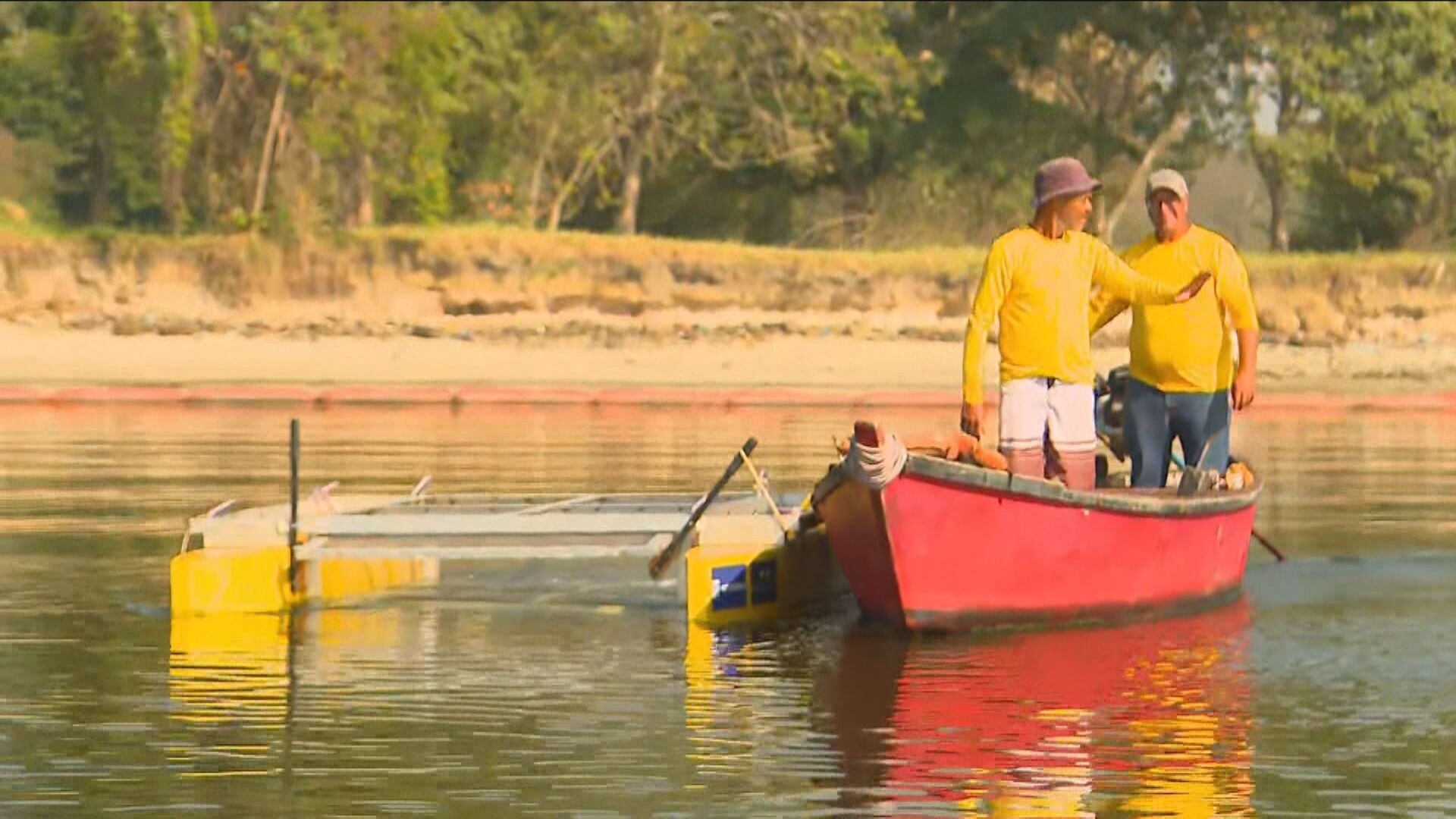
Researchers at the Federal University of Rio de Janeiro (UFRJ) have designed a floating garbage collector that can be attached to fishing boats to remove waste from Guanabara Bay. This initiative, part of the "Orla Sem Lixo" (Coastline Without Trash) project, is currently being tested in Enseada do Fundão, where accumulated debris significantly hinders fishing activities. Fishermen report that their nets often return filled with up to 90% trash, negatively impacting their work and income. The floating collector functions like a catamaran, with a cage-like structure attached to two submerged floating compartments. A ramp guides floating debris into the compartments for storage until collection. The equipment is intended for use near beaches and containment barriers, aiming to prevent waste from reaching the shore. Developed in partnership with Petrobras and UFRJ's Naval Engineering program, the project seeks to create a low-cost, replicable model for other fishing communities. Petrobras' environmental project manager, Michele Gomes Cardoso, stated the goal is to reduce solid waste in the bay and mitigate its impact on biodiversity and the local population. The collector also enhances fisherman safety by allowing waste collection without direct contact. After collection, waste is sorted, with some plastics undergoing chemical recycling to become raw materials for new products. Petrobras plans to expand the project to other areas of Guanabara Bay and will compensate fishermen for their collection services, linking environmental preservation with income generation. The collector will work alongside other waste containment measures, such as eco-barriers. Fishermen have observed improvements in marine life, with the return of previously absent species, indicating positive environmental recovery.
This initiative addresses the critical issue of marine pollution in Guanabara Bay by leveraging the existing infrastructure and labor of local fishermen. By integrating waste collection into their daily activities, the project creates a dual benefit: cleaning the bay and providing an additional income stream for the fishing community. The focus on a low-cost, replicable design suggests a scalable solution that could be adopted by other coastal areas facing similar challenges. The partnership between academia (UFRJ), industry (Petrobras), and the community (fishermen) exemplifies a collaborative approach to environmental management. Future considerations might include optimizing the collection and recycling processes, exploring broader economic incentives for waste management, and assessing the long-term ecological impact of reduced pollution on marine ecosystems and the fishing industry.
AI-generated to prompt reflection — not editorial opinion, not advice, not a statement of fact. How this works.