UK Bestseller Novels Feature Female Murder Victims in 90% of Top 10
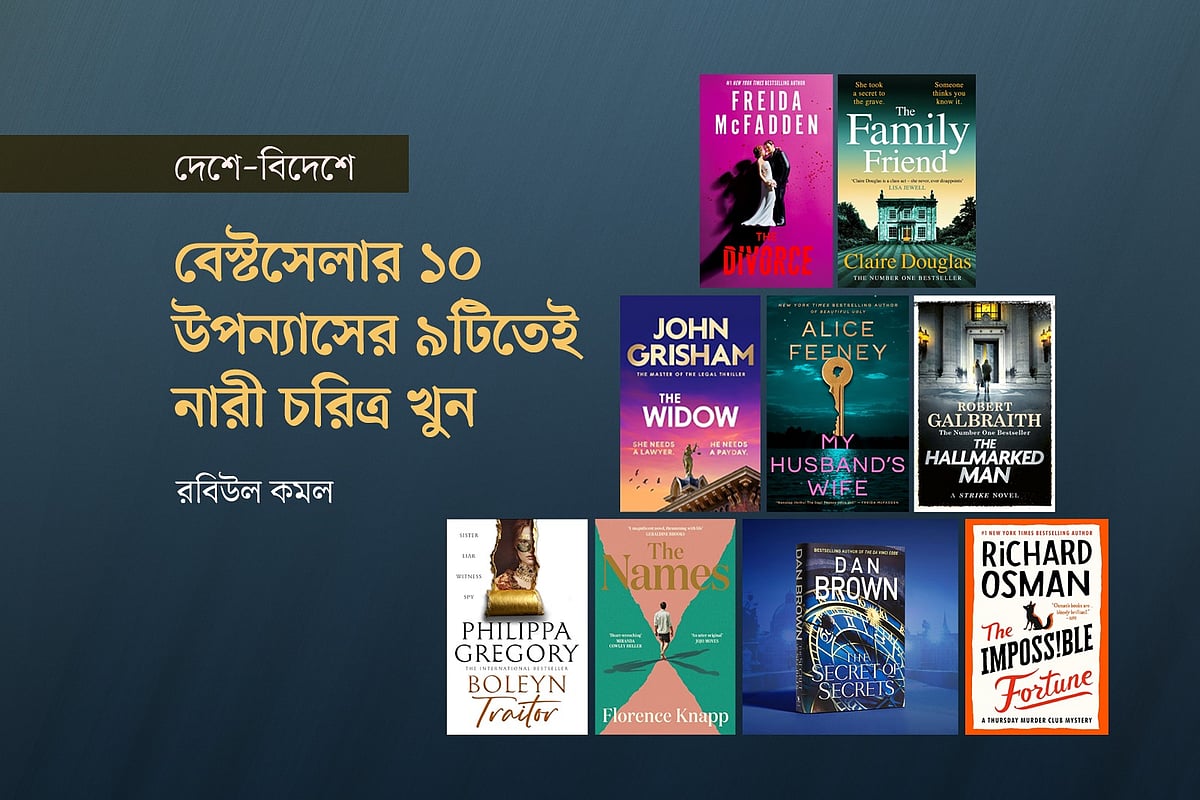
A recent analysis of the UK's bestseller list has revealed a striking trend: nine out of the ten most-sold paperback fiction books feature a murdered woman as a central plot element. This phenomenon, first highlighted by British author Wendy Jones on Instagram, has sparked debate among readers, writers, and critics alike. The statistic, which excludes only one novel titled 'The Correspondent,' has raised questions about the normalization of violence against women and the motivations behind this recurring narrative.
While some critics argue that this overrepresentation of murdered women could desensitize society to violence against females, others suggest these stories tap into universal human fears, anxieties, and a desire for justice. The prevalence of such themes echoes a long-standing tradition in literature, from Daphne du Maurier's gothic mysteries to Gillian Flynn's psychological thrillers, with a notable surge in "girl thrillers" following the success of Flynn's 'Gone Girl' in 2012. Authors like Laura Wilson and Scott Bon suggest that female readers are drawn to these narratives as a way to process real-life fears and insecurities, finding a sense of catharsis when justice is ultimately served within the fictional realm.
However, concerns remain about the stereotypical portrayal of female victims, often depicted as young, attractive, and white. Some analysts, like Laurie R. King, point out that this can reduce the victim to a mere symbol rather than a fully realized character, potentially reflecting lingering societal biases. Despite these critiques, many crime fiction writers, such as Sophie Hannah and Val McDermid, emphasize that depicting violence in literature is not the same as endorsing it, arguing that the role of fiction is to analyze such acts and ensure that justice, even in narrative form, is ultimately achieved.
The prevalence of murdered female characters in UK bestseller lists suggests a complex interplay between market demand and narrative tropes. While this trend may reflect readers' engagement with themes of fear, justice, and societal anxieties, it also raises questions about the potential for normalizing violence against women. From a systems perspective, publishers and authors may be responding to perceived market incentives, potentially overlooking the broader societal implications of repeatedly centering female victimhood. Future literary analysis could explore how evolving AI-driven content generation and audience segmentation might further influence or challenge these established narrative patterns, prompting a reevaluation of how societal issues are represented in popular fiction.
AI-generated to prompt reflection — not editorial opinion, not advice, not a statement of fact. How this works.