UK Labour Party Leadership Change: Andy Burnham Replaces Keir Starmer
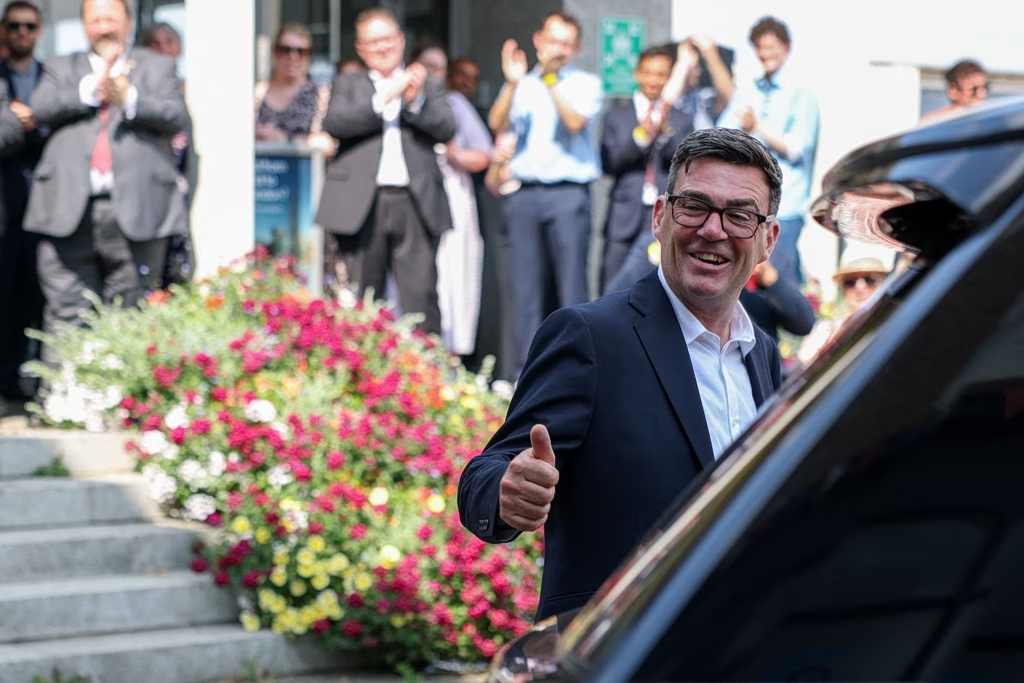
Andy Burnham has succeeded Keir Starmer as the leader of the Labour Party following Starmer's resignation. Burnham is now poised to become Prime Minister, vowing to continue the work of his predecessor. This leadership transition occurs without the need for a general election. The party is shifting its direction under Burnham's guidance, aiming to maintain continuity while potentially introducing new strategies. Starmer's departure marks a significant moment for the Labour Party as it navigates its path forward. Burnham's immediate focus will be on unifying the party and preparing for future political challenges. The decision to not hold an election means the government's mandate remains unchanged for now. This development sets the stage for a new phase in British politics under Burnham's leadership. The party's policy platform is expected to be closely examined in the coming weeks.
The Labour Party's internal leadership change, facilitated by a resignation rather than a public vote, highlights a structural mechanism for executive succession within a major political party. This process allows for a shift in leadership without triggering the broader political and economic uncertainties associated with a general election. The emphasis on continuing the predecessor's work suggests a strategy aimed at consolidating existing support bases and projecting stability. However, such transitions can also mask underlying party dynamics and policy debates that may not be fully addressed through internal mechanisms. The effectiveness of this approach will be tested by the party's ability to adapt to evolving public sentiment and address contemporary challenges in the coming decade, particularly concerning economic policy and social cohesion.
AI-generated to prompt reflection — not editorial opinion, not advice, not a statement of fact. How this works.