UK's New PM Andy Burnham's Slogan Echoes Author's Own Failed Plans
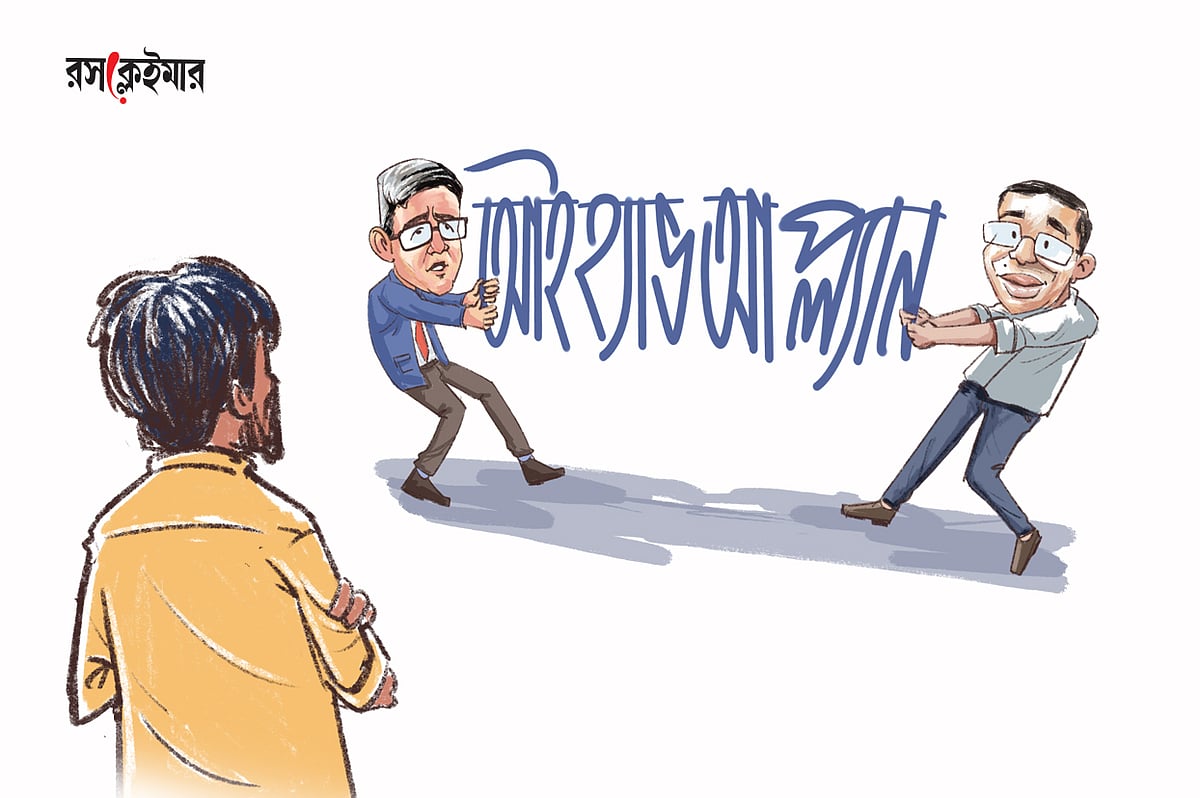
Andy Burnham has taken office as the new Prime Minister of the United Kingdom, initiating a new political chapter with the slogan 'I have a plan.' The author notes a striking similarity between Burnham's statement and pronouncements made by Bangladesh's Prime Minister. This resonance prompts the author to reflect on their own lifelong habit of claiming to have a plan, a strategy that has consistently led to failure. This pattern began in childhood during cricket matches, where the author would feign a strategy when failing to hit the ball, only to be dropped from the team. Later, during college, a romantic relationship ended when the author's girlfriend married someone else, implying she had a superior plan. During a period of unemployment, the author considered becoming a 'Himu' (a fictional character known for unconventional behavior) but opted for a more conventional, shoe-wearing version. This led to conflict with his mother over not bathing during winter. When pressed, the author again invoked 'I have a plan,' which resulted in being asked to leave home. His mother's parting words, when he questioned who would care for them in old age, were 'I have a plan,' followed by a slammed door. The author concludes by offering good wishes to both the UK and Bangladeshi Prime Ministers.
The narrative employs a rhetorical device where a political slogan is juxtaposed with personal anecdotes of failed plans. This framing invites reflection on the efficacy of pronouncements versus concrete execution, particularly in leadership contexts. The author's self-deprecating humor highlights the gap between aspirational statements and practical outcomes. From a systems perspective, the repeated assertion of having a 'plan' without demonstrable success suggests a potential disconnect between strategic intent and operational capacity. This dynamic is relevant across various domains, from personal development to national governance, where the communication of future intentions must be underpinned by credible implementation frameworks. The author's mother's final retort, 'I have a plan,' mirrors the political rhetoric, suggesting that even in personal matters, the assertion of a plan can serve as a decisive, albeit sometimes exclusionary, response. This underscores the universal human tendency to project control and foresight, even when faced with uncertainty or personal shortcomings.
AI-generated to prompt reflection — not editorial opinion, not advice, not a statement of fact. How this works.