UK Treasury Views Defense Spending as a Cost, Not an Economic Driver, Says Healey
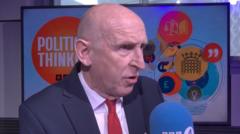
John Healey has resigned from his position as Defence Secretary due to the prolonged delay in implementing a military spending plan. According to Healey, the Treasury perceives defense expenditure primarily as a financial burden rather than a catalyst for economic growth. This perspective suggests a fundamental disagreement within the government regarding the strategic importance and economic impact of defense investments. The delay in the military spending plan indicates potential challenges in securing the necessary funding and political consensus for defense initiatives. Healey's departure highlights the tension between national security needs and fiscal priorities. His statement implies that the Treasury's current stance may hinder modernization efforts and operational readiness within the armed forces. This situation could have long-term implications for the UK's defense capabilities and its role on the international stage. The economic arguments against defense spending, as perceived by the Treasury, may need to be re-evaluated in light of evolving geopolitical threats.
The divergence in perspective between the Treasury and the Ministry of Defence, as highlighted by John Healey's resignation, points to a systemic tension between fiscal conservatism and national security imperatives. This situation reflects a broader debate in many nations regarding the allocation of public funds, where defense spending is often viewed through a cost-benefit lens that may not fully capture its potential as a driver of innovation, technological advancement, and high-skilled employment. Over the next decade, as geopolitical instability potentially increases and technological competition intensifies, governments will face increasing pressure to balance these competing demands. A framework that quantifies the secondary economic benefits of defense investment, beyond immediate security concerns, could offer a more integrated approach to resource allocation, fostering both national security and economic resilience.
AI-generated to prompt reflection — not editorial opinion, not advice, not a statement of fact. How this works.