Ukraine Accuses Russia of War Crime After Drone Attack on Civilian in Kherson
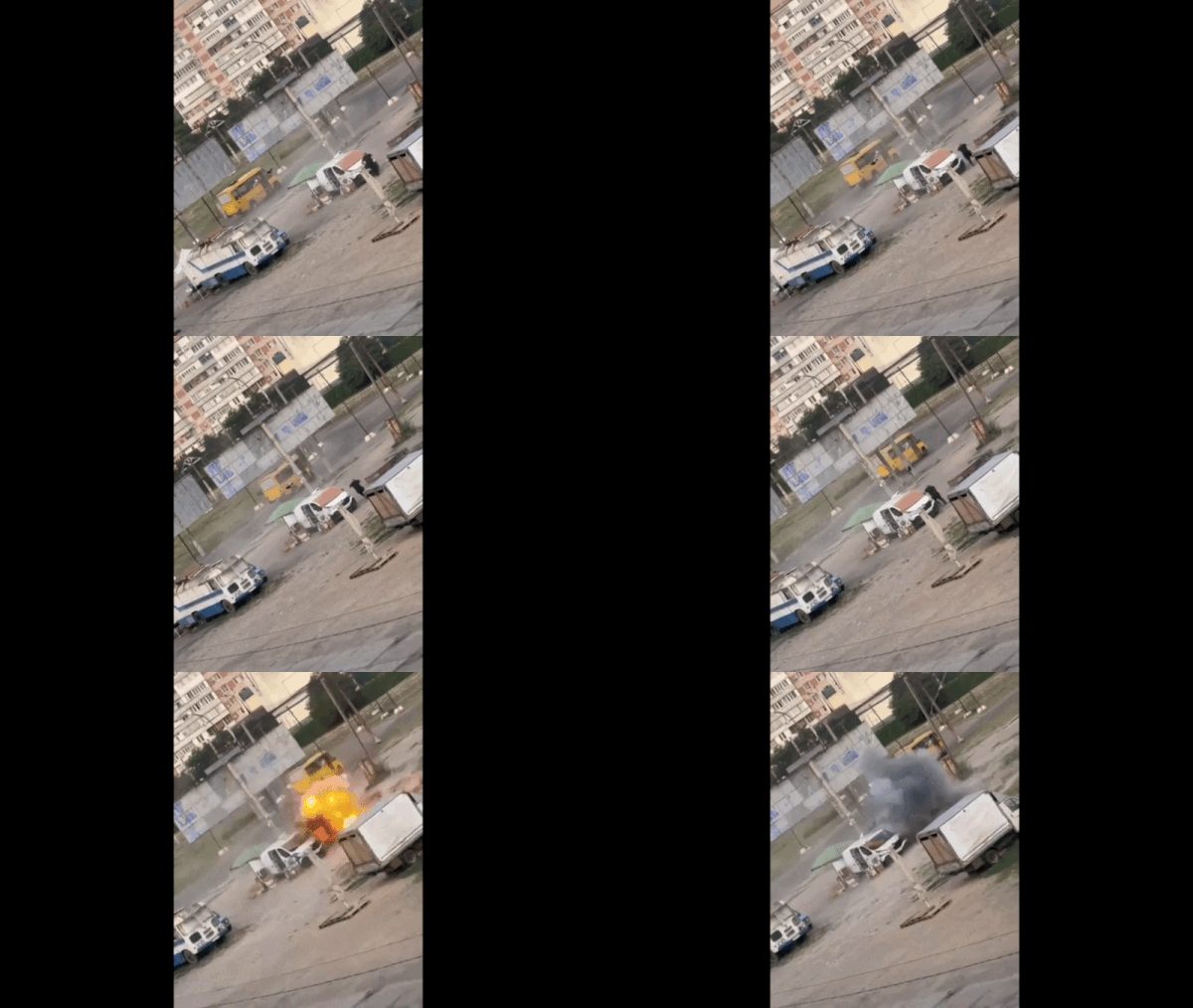
Ukraine has accused Russia of committing a war crime following the release of a video showing a drone attacking a street vendor in the southern city of Kherson. The footage, shared by Ukrainian police, depicts a drone pursuing an unidentified man around his street stall van before detonating, causing an explosion. According to authorities, the vendor, a man in his 50s, survived the attack but sustained shrapnel injuries and was left in shock. Ukrainian President Volodymyr Zelensky condemned the incident on social media, referring to it as another "drone safari" by Russian forces against civilians in Kherson. He reiterated his call for increased international pressure on Russia and stronger security guarantees for Ukraine, urging actions that compel Russia to seriously consider peace. Reuters independently verified the attack location using building features, road layouts, and vegetation matching satellite imagery, though the exact date of the video could not be independently confirmed. Ukrainian police and Foreign Minister Andrii Sybiha stated the incident occurred on Tuesday, with Sybiha describing it as a deliberate campaign to intimidate civilians and calling the drone operator a "sadist." Separately, two children and an elderly woman were killed in Russian bomb attacks on Sumy, in northern Ukraine. The UN Human Rights Monitoring Mission in Ukraine reported 1,396 civilian deaths and 7,978 injuries in the first six months of 2026, a 37% increase from the previous year, attributing the rise to intensified Russian long-range missile and drone attacks on urban centers. Ukraine also conducts drone and missile attacks on Russia, with Russian authorities reporting civilian casualties from these strikes. Russia recently accused Ukraine of terrorism after a drone attack in Gelendzhik resulted in seven deaths, including three children, which Ukraine attributed to Russian air defense systems.
This incident highlights the ongoing challenge of distinguishing between military and civilian targets in urban warfare, particularly with the proliferation of drone technology. The Ukrainian government's immediate classification of the attack as a war crime underscores the legal and ethical frameworks governing conflict, aiming to hold perpetrators accountable and deter future violations. Russia's counter-accusations of terrorism against Ukraine, citing civilian casualties from Ukrainian drone strikes, reflect a broader information warfare component where both sides seek to shape international perception and justify their actions. The increasing reliance on drones by both belligerents, while offering tactical advantages, also presents systemic risks of collateral damage and escalates the potential for civilian harm, demanding robust de-escalation mechanisms and adherence to international humanitarian law to mitigate these risks in the coming decade.
AI-generated to prompt reflection — not editorial opinion, not advice, not a statement of fact. How this works.
