Ukraine Appoints New Armed Forces Commander Amidst Government Shake-up
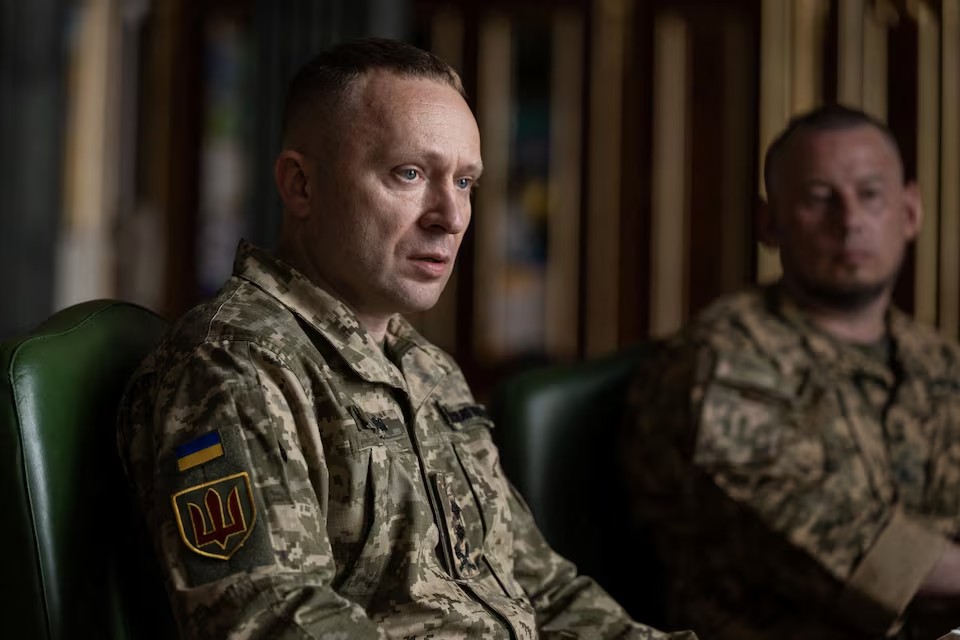
Ukrainian President Volodymyr Zelensky has appointed Major General Mykhailo Drapatyi, 43, as the new Commander-in-Chief of the Armed Forces, marking a significant leadership change. This reshuffling follows the recent departure of Defense Minister Mykhailo Fedorov, 35, who was instrumental in advancing military technology, particularly drones. Drapatyi, a respected commander who previously led Ukraine's ground forces, replaces Oleksandr Syrskyi, 60, who had held the top military post since early 2024. The change comes after a political crisis triggered by government restructuring, which exposed internal divisions between proponents of technological innovation and the more traditional military wing. Fedorov had reportedly clashed with Syrskyi over the implementation of new battlefield technologies. Protests in Kyiv, advocating for Fedorov's return and Syrskyi's replacement, saw some demonstrators celebrating Drapatyi's appointment. President Zelensky stated that military operations would continue without interruption, emphasizing the precise execution of long-range sanctions and medium-range strike programs. This leadership transition occurs as Ukraine intensifies efforts to pressure Russia through attacks on energy infrastructure and logistics, vital to the Russian economy. Concerns have been raised by analysts regarding potential setbacks in Ukraine's technological advancements in warfare following Fedorov's exit. Drapatyi expressed his commitment to the new role with "responsibility" and "total dedication." Syrskyi, credited for his role in Kyiv's defense early in the war, faced criticism for a rigid command style and troop losses. Zelensky indicated discussions with Syrskyi about his continued military career and offered Fedorov a significant role in state technology coordination, though Fedorov expressed a desire to return to his previous position.
The recent Ukrainian military and government reshuffles highlight the inherent tension between established military doctrine and the imperative for rapid technological adaptation in modern warfare. The removal of a defense minister focused on innovation, coupled with the appointment of a new military commander, suggests a potential recalibration of strategic priorities. While continuity in military operations is asserted, the underlying conflict between traditional command structures and agile, technology-driven approaches may present long-term governance challenges. Future success will likely depend on integrating cutting-edge technologies effectively within existing military frameworks, fostering collaboration between civilian technological expertise and military leadership, and ensuring that strategic decisions are informed by both battlefield realities and the evolving technological landscape of the next decade.
AI-generated to prompt reflection — not editorial opinion, not advice, not a statement of fact. How this works.