Ukraine Deploys Robot Forces to Replace Soldiers in Dangerous Frontline Tasks
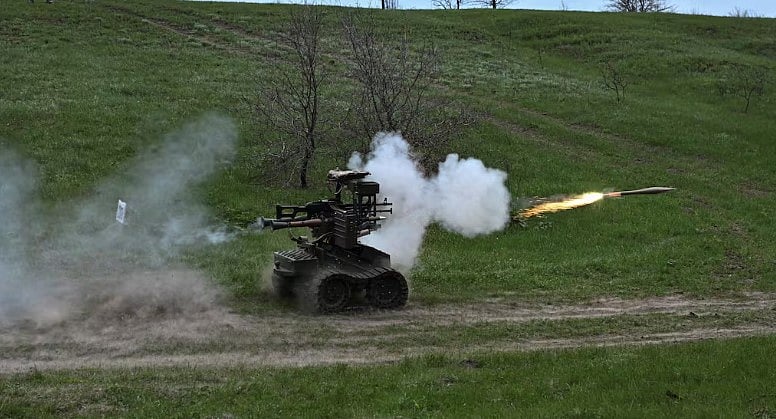
Ukraine is increasingly utilizing Unmanned Ground Vehicles (UGVs), or "robot forces," to perform hazardous tasks on the front lines, aiming to preserve soldiers' lives. President Volodymyr Zelenskyy has set a goal of deploying at least 50,000 UGVs by 2026, calling it "the next big step in technology." Experts believe Ukraine will surpass this target, with projections indicating 25,000 robots contracted for frontline use by early 2026, double the amount for the entirety of 2025. The domestic robot industry has seen explosive growth, with one survey showing a 488% market increase in 2025 compared to the previous year. Commanders suggest these robots could eventually handle up to one-third of frontline infantry duties, working in conjunction with aerial drones to identify and neutralize enemy positions before ground troops advance.
These UGVs are performing a variety of missions, including logistics and supply delivery, with over 10,000 successful missions recorded in April alone. They are also used to counter Russian infiltration units, allowing soldiers to engage threats remotely. Some robots are equipped with remote-controlled turrets for offensive actions, while others patrol independently. In February, one regiment successfully captured a Russian base near Kupyansk using only ground robots, kamikaze drones, and strike drones. Ukraine's Ministry of Defense has announced the formation of "drone assault units" integrating aerial drones, ground robots, and infantry. Beyond combat, robots are employed for engineering tasks like constructing defensive barriers, though they remain vulnerable to enemy FPV drones. Developers are also exploring advanced capabilities such as net launchers to intercept low-flying drones and AI-enabled robotic air defense systems capable of autonomous target engagement.
Despite advancements, human infantry remains crucial for occupying and holding territory, as robots are not a complete substitute. Major challenges to widespread deployment include weak communication systems, which are being addressed by mesh networking technology to enhance jamming resistance. Russia is also developing and deploying its own UGVs for similar purposes, including logistics and casualty evacuation, with systems like Courier, Depesha, and Impuls. However, Ukraine is currently considered to have an advantage in deployment and usage, potentially due to Russia's communication limitations. Both militaries recognize the essential role of ground robots in modern warfare, with Ukrainian commanders increasingly incorporating robotic capabilities into their offensive planning. Future developments focus on making robotic assaults a routine operation rather than an exception, while acknowledging that current systems face risks from FPV drones and mines, and armed robots require manual reloading.
Ukraine's rapid integration of Unmanned Ground Vehicles (UGVs) into its military operations signifies a pivotal shift in modern warfare, driven by the imperative to reduce human casualties in high-risk combat zones. This technological pivot reflects a broader trend where AI and robotics are increasingly becoming force multipliers, capable of performing tasks ranging from logistics and reconnaissance to direct offensive actions. The strategic advantage lies not only in the vehicles themselves but in their seamless integration with aerial drones and sophisticated command-and-control systems, creating a multi-domain operational capability. However, the reliance on networked communication highlights a critical vulnerability; the effectiveness of these systems is directly tied to their resilience against electronic warfare and jamming. As both Ukraine and Russia advance their robotic capabilities, the future battlefield will likely be characterized by an escalating arms race in autonomous systems, forcing a reevaluation of traditional military doctrines and human roles in conflict. The challenge for all actors will be to harness these powerful technologies responsibly, balancing operational efficiency with ethical considerations and the fundamental need for human oversight.
AI-generated to prompt reflection — not editorial opinion, not advice, not a statement of fact. How this works.