Ukraine Launches Over 400 Drones at Moscow Region, Injuring 10 and Igniting Industrial Hub
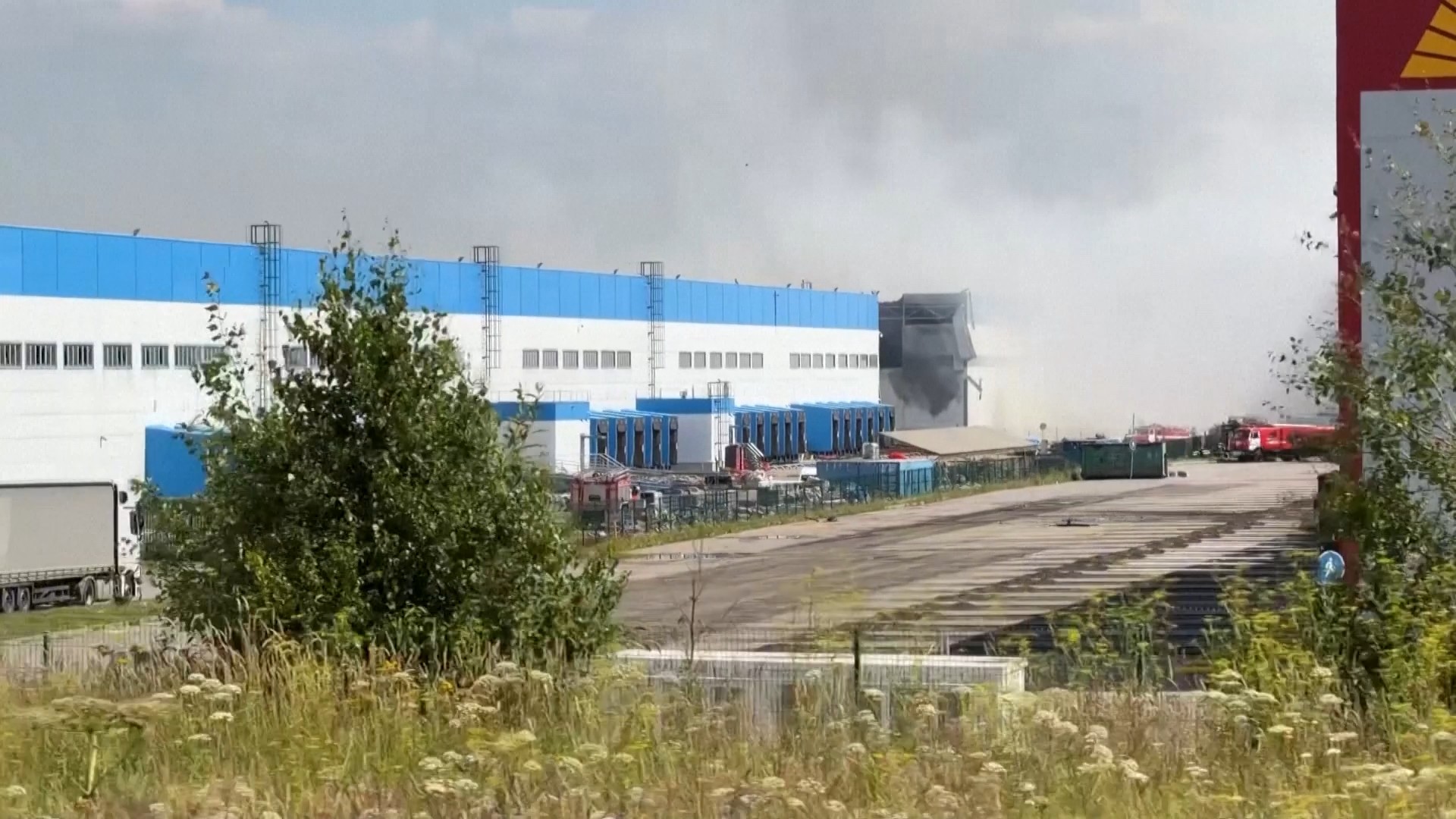
Ukraine launched more than 400 drones targeting Moscow and its surrounding region on Sunday night, resulting in 10 injuries and a significant fire at an industrial complex. The attack impacted residential areas and civilian infrastructure in Domodedovo, Podolsk, and Odintsovo. Among the injured was an 11-year-old girl, as reported by regional governor Andrei Vorobyov. The primary target, the Iuzhnie Vrata industrial complex, located about 30 km south of Moscow near Domodedovo, is one of Russia's largest, covering 600,000 square meters. Russia's Investigative Committee has opened a case for "terrorism" following the extensive Ukrainian drone assault. This incident follows a day of intense missile attacks by Russia on Ukraine's capital, Kyiv, which killed at least six people and injured dozens. Similar Russian offensives also struck Kharkiv, Kherson, and Sumy. Ukrainian authorities note that Russian forces have recently escalated ballistic missile attacks on Ukrainian cities, coinciding with Ukraine's limited supply of essential US-provided air defense systems.
This escalation in drone and missile exchanges highlights a critical phase in the conflict, characterized by reciprocal targeting of strategic and civilian infrastructure. The extensive drone deployment by Ukraine against the Moscow region, and Russia's retaliatory missile strikes on Ukrainian cities, underscore the evolving asymmetric warfare tactics. Both sides appear to be leveraging available technologies to inflict damage and disrupt enemy operations, while also aiming to influence domestic and international perceptions of the conflict's progress. The focus on industrial sites and civilian areas suggests a strategic shift towards degrading economic capacity and potentially increasing public pressure. As the conflict continues, the reliance on increasingly sophisticated drone technology and the strain on air defense systems will likely remain central challenges, shaping the future trajectory of military engagements and humanitarian impacts.
AI-generated to prompt reflection — not editorial opinion, not advice, not a statement of fact. How this works.