Ukraine's Attack on Iranian Ship Fuels Fears of Wider Conflict
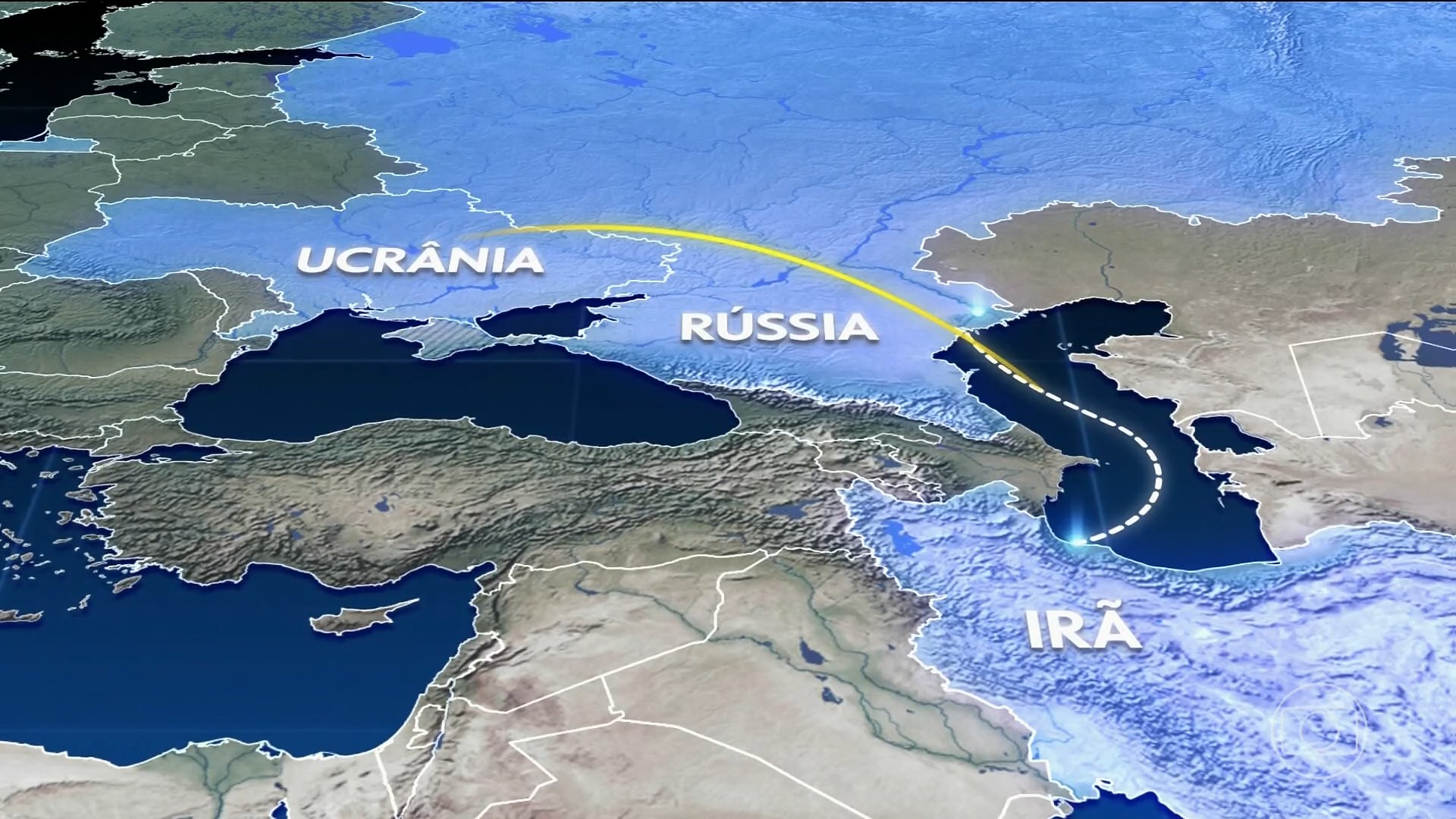
An attack by Ukrainian drones on an Iranian commercial vessel in the Caspian Sea has heightened concerns about the potential interconnection of global conflicts. The incident occurred shortly after a Russian missile landed in Poland, a NATO member, amplifying fears of an expansion of the war in Ukraine. The Kremlin characterized the Ukrainian action as a direct attack on Iran. The targeted ship, which had departed from Astrakhan, Russia, en route to Anzali, Iran, was hit in the Caspian Sea, a vital waterway for trade and military movement connecting Russia, Iran, and Central Asian nations. Tragically, one sailor lost their life in the attack. Analyst Hussein Kalout described the Ukrainian action as strategically astute yet perilous, suggesting it aimed to align Ukraine with the United States amidst Iran's conflicts. Kalout believes Ukraine seeks to position itself as an auxiliary force against Iran to secure greater U.S. military aid against Russia. This event potentially links the war in Ukraine, supported by Western powers, with the broader conflict involving Iran, the United States, and Israel, which has impacted over ten regional countries. Russia has received support from North Korea and electronic components from China, while Iran supplies drones to Russia. Experts worry that these regional conflicts could escalate into direct confrontations between major global powers, potentially leading to a larger war. Despite current tensions, the U.S. and China appear disinclined towards open conflict, possibly opting to exert influence through allied nations. Kalout noted that the specter of a Third World War has always been present, warning that such an escalation would cause global economic collapse, which neither the U.S. nor China, a major beneficiary of globalization, desires.
The reported drone strike by Ukraine on an Iranian commercial vessel in the Caspian Sea, following a Russian missile incident in Poland, highlights the complex entanglements of current geopolitical conflicts. From a strategic perspective, Ukraine's action may be interpreted as an attempt to leverage regional tensions to secure increased military support from the United States, potentially drawing parallels between its conflict with Russia and broader international concerns involving Iran. This maneuver, while potentially advantageous in the short term for Ukraine's defense, carries inherent risks of unintended escalation, drawing disparate conflicts and their associated global powers into closer proximity. The interconnectedness of supply chains and military alliances suggests that regional instability, particularly involving major economic and military actors like Russia, China, Iran, and Western nations, could have cascading global consequences. The analysis prompts consideration of how strategic decisions in localized conflicts can inadvertently create systemic risks, challenging actors to balance immediate defense needs against the imperative of maintaining global stability and avoiding a wider, potentially catastrophic, confrontation in an increasingly multipolar world.
AI-generated to prompt reflection — not editorial opinion, not advice, not a statement of fact. How this works.