Ukraine's Drone Commander: The 'Black Death' of the Third Millennium
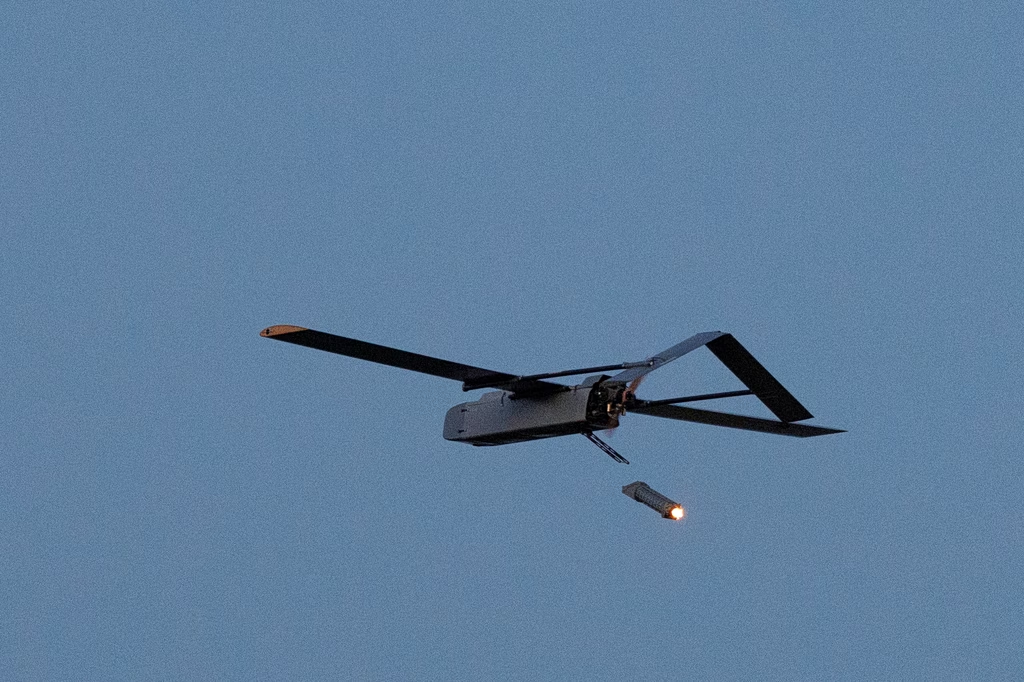
A 50-year-old commander, leading a new specialized corps within the Ukrainian army, has described unmanned aerial systems as the 'Black Death of the third millennium.' Operating from an underground shelter, he heads a unit focused on the development and deployment of these advanced technologies. This new corps signifies Ukraine's strategic emphasis on drone warfare as a critical component of its military capabilities. The commander's stark assessment highlights the transformative impact of drones on modern conflict. His operational base from a shelter underscores the ongoing security challenges faced by Ukraine. The establishment of this specialized unit reflects a significant investment in innovation and adaptation within the Ukrainian armed forces. The term 'Black Death' suggests a perception of drones as a potentially devastating and pervasive force on the contemporary battlefield. This initiative positions Ukraine at the forefront of integrating cutting-edge technology into military strategy.
The strategic integration of unmanned aerial systems by Ukraine's military represents a significant evolution in modern warfare, potentially redefining battlefield dominance. This development underscores the increasing importance of technological innovation in national defense, particularly in asymmetric conflict scenarios. The emphasis on drones reflects a broader global trend towards leveraging AI and autonomous systems for reconnaissance, logistics, and offensive operations. Future military doctrines will likely be shaped by the effectiveness and ethical considerations surrounding such technologies, prompting a re-evaluation of traditional force structures and strategic planning. The long-term implications involve arms races in drone technology and counter-drone measures, necessitating robust governance frameworks and international dialogue to ensure responsible development and deployment.
AI-generated to prompt reflection — not editorial opinion, not advice, not a statement of fact. How this works.