Ukraine's Political Crisis: Defense Minister Fired Amidst Clash with General
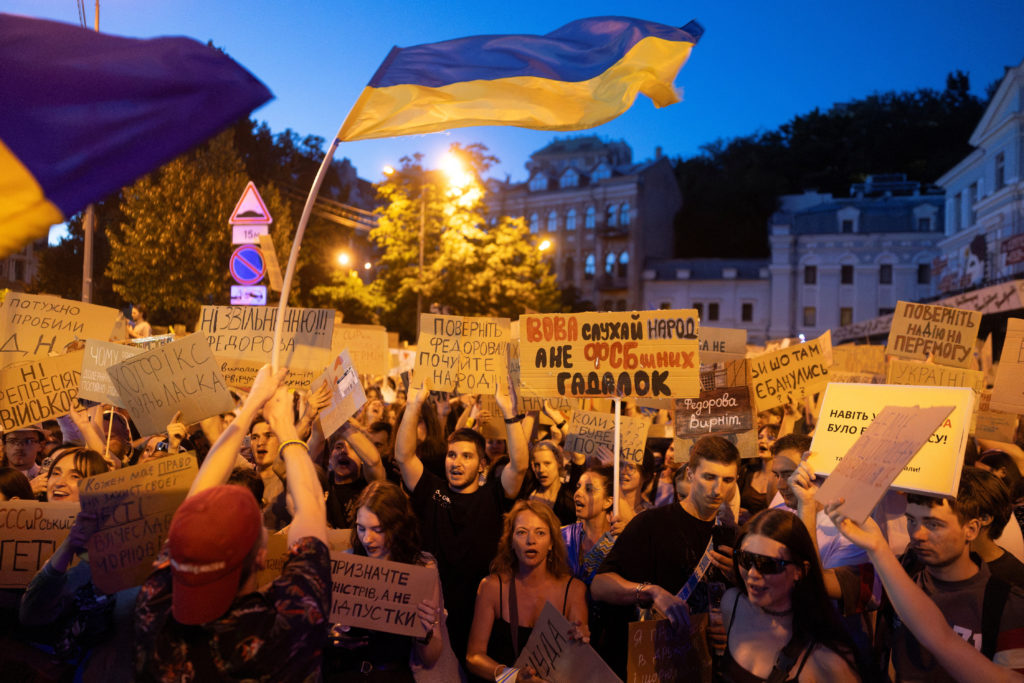
Ukrainian President Volodymyr Zelenskyy has dismissed the popular Defense Minister Mykhailo Fedorov, a young tech innovator, from his post. The decision follows a significant clash between Fedorov's personality and policies and those of General Oleksandr Syrskyi. General Syrskyi will remain in his position, indicating a shift in the country's defense leadership. This move signals a potential change in Ukraine's strategic direction and internal political dynamics. The specifics of the policy disagreements and personality clashes have not been fully detailed, but the outcome is a clear change at the top of the defense ministry. Fedorov's tenure was marked by a focus on technological advancements in defense, aligning with his background as a tech innovator. General Syrskyi represents the more traditional, established military leadership. The president's decision to prioritize the general's approach over the minister's suggests a move towards a more conventional military strategy or a resolution of internal power struggles. This development occurs within the broader context of Ukraine's ongoing political landscape and its defense challenges.
The reported dismissal of Defense Minister Mykhailo Fedorov, a figure associated with technological innovation, in favor of retaining General Oleksandr Syrskyi, suggests a potential recalibration of Ukraine's defense strategy. This event may reflect a tension between modernizing approaches, often championed by younger, tech-oriented leaders, and the established military hierarchy's priorities and operational doctrines. Such shifts can be influenced by the immediate demands of ongoing conflict, which might favor experienced military leadership, or by internal political dynamics seeking to consolidate power or align with specific factions. Over the next decade, Ukraine's ability to integrate cutting-edge technology with robust, traditional military structures will be a critical determinant of its long-term security and resilience. The challenge lies in fostering an environment where both innovation and established expertise can effectively complement each other, rather than creating internal friction that could impede strategic objectives.
AI-generated to prompt reflection — not editorial opinion, not advice, not a statement of fact. How this works.