Ukraine's US Support Faces Uncertainty After Senator Graham's Death
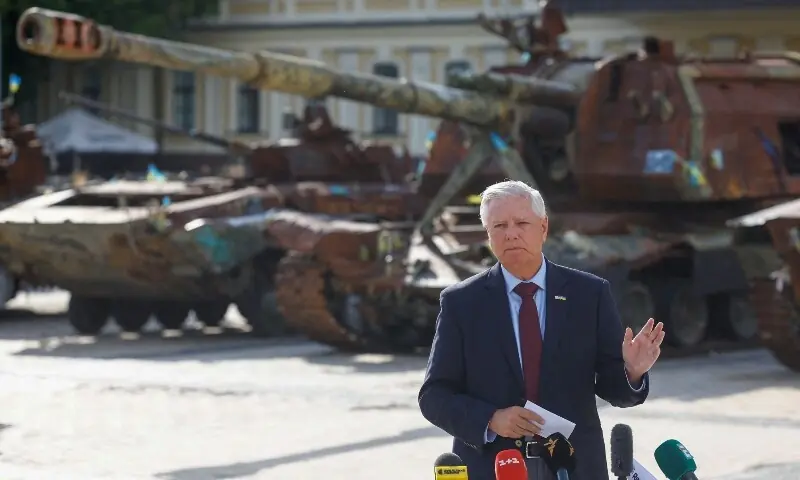
The unexpected death of US Senator Lindsey Graham, a prominent advocate for Ukraine and an ally of former President Donald Trump, has raised significant questions about the future of US support for Kyiv. Graham was instrumental in pushing for legislation to sanction Russia and secure military assistance for Ukraine, issues that have gained recent momentum amidst intensified Russian attacks and pressure for a resolution to the nearly 4.5-year conflict. He had recently announced an agreement with the White House to advance the "Sanctioning Russia Act," a bill co-sponsored by 85 senators that had faced resistance from Trump. Graham, who died at 71, had made ten trips to Ukraine since February 2022 and had previously facilitated a critical minerals agreement between the US and Ukraine, securing preferential access for US investment in Ukrainian projects. President Volodymyr Zelenskyy expressed deep sadness, noting their frequent dialogue and recent meetings. Analysts suggest Graham's influence, particularly in bridging divides within the Trump administration regarding Ukraine, was crucial. Despite Graham's efforts, Trump had previously shown a mixed stance, influenced by his "America First" policy and strained relations with Zelenskyy. The departure of Graham, along with other pro-Ukraine lawmakers like Mitch McConnell, could make it more challenging to pass future aid packages and sanctions legislation. However, supporters of the sanctions bill intend to push for its passage as a tribute to Graham, with some proposing to rename the bill in his honor. The Senate has not yet set a timeline for a vote on the sanctions bill, but its passage is seen by some as a fitting legacy for the late senator.
Senator Graham's passing removes a key proponent of Ukraine aid from the US political landscape, particularly highlighting the influence of individual relationships on foreign policy. The event underscores the complex interplay between domestic political dynamics, personal diplomacy, and international commitments. While Graham's role as a bridge to the Trump administration was significant, the sustainability of Ukraine initiatives may depend more on broader geopolitical considerations and bipartisan consensus rather than singular advocates. The push to pass legislation in his memory suggests a potential for continued support, but the underlying challenges of resource allocation and evolving foreign policy priorities within the US will likely persist. Future US engagement with Ukraine will be shaped by these systemic factors, alongside the capacity of other lawmakers to build and maintain bipartisan coalitions.
AI-generated to prompt reflection — not editorial opinion, not advice, not a statement of fact. How this works.