Ukraine Strikes Russian Tankers in Azov Sea Amid Night of Drone Attacks
Ukraine has targeted two vessels belonging to Russia's "shadow fleet" in the Sea of Azov, according to Ukraine's top drone commander, Robert Brovdi. This action follows a night of extensive drone and missile exchanges between Russia and Ukraine. Brovdi stated on Telegram that the attacked tankers, each carrying 7,000 tons of fuel, were en route from the Russian port city of Taganrog to Crimea. The Sea of Azov, situated between Russia, Ukraine, and Russian-annexed Crimea, connects to the Black Sea via the Kerch Strait. Brovdi identified the ships as part of Russia's shadow fleet, a tactic used to circumvent Western sanctions on fuel and oil shipments. Additionally, Ukrainian drones reportedly struck an oil depot in Kerch, two Russian S-400 air defense systems, and a radar system.
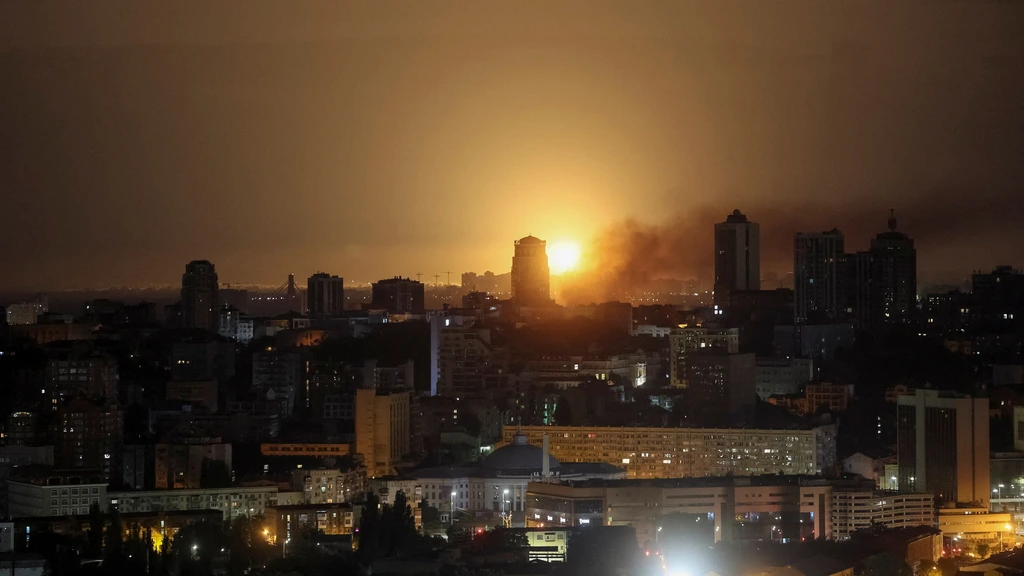
Overnight, Crimea experienced power outages due to Ukrainian attacks on energy infrastructure, according to Russian-appointed authorities. In Yaroslavl, Russia, a fire broke out at an oil refinery following a Ukrainian drone strike, as reported by the independent Russian media outlet Astra. Russia claims to have intercepted 613 Ukrainian drones over its regions, out of a total of 625 deployed. Russian authorities indicated that oil and port infrastructure were among the targets, with drones also reportedly downed near Moscow. Russia also conducted attacks on Ukraine, with Kyiv being heavily impacted. At least twelve people were killed and sixty injured in the Ukrainian capital, while three people were killed and sixteen injured in the Kyiv region. Ukraine's air force reported that Russia launched 68 missiles and 351 drones, of which 37 missiles and 326 drones were intercepted.
These escalations occur just two days before Ukrainian President Zelensky's meeting with the U.S. President in Turkey, where a NATO summit will also be held. Following the latest Russian assaults, Zelensky reiterated his call for increased European and American support for Ukraine's air defense. This marks the second large-scale attack on Kyiv in four days. Zelensky noted that while Ukraine is effective at intercepting Russian drones and cruise missiles, it struggles with ballistic missiles, for which it relies heavily on U.S.-supplied Patriot systems and interceptor missiles, of which Ukraine reports a shortage. He suggested that Russia is emboldened to continue attacking residential areas as long as Patriot missiles remain in allied stockpiles, asserting that the U.S. and Europe possess sufficient resources to halt this "terror."
The recent escalation in cross-border drone and missile attacks between Russia and Ukraine, including strikes on maritime infrastructure and energy facilities, highlights the evolving nature of the conflict. Ukraine's targeting of Russian oil tankers, part of its "shadow fleet," aims to disrupt Russian revenue streams and circumvent sanctions, while Russia's widespread drone and missile barrages appear intended to degrade Ukrainian air defenses and civilian morale. The strategic importance of air defense systems, particularly U.S.-supplied Patriots, is underscored by Ukraine's appeals for increased supply, revealing a critical dependency that Russia may seek to exploit. As the conflict persists, the interplay between offensive capabilities, defensive limitations, and international support will continue to shape its trajectory, posing significant challenges for regional stability and global energy markets.
AI-generated to prompt reflection — not editorial opinion, not advice, not a statement of fact. How this works.