Ukraine Targets Russian Grain Industry with Drones, Expanding Warfare Tactics
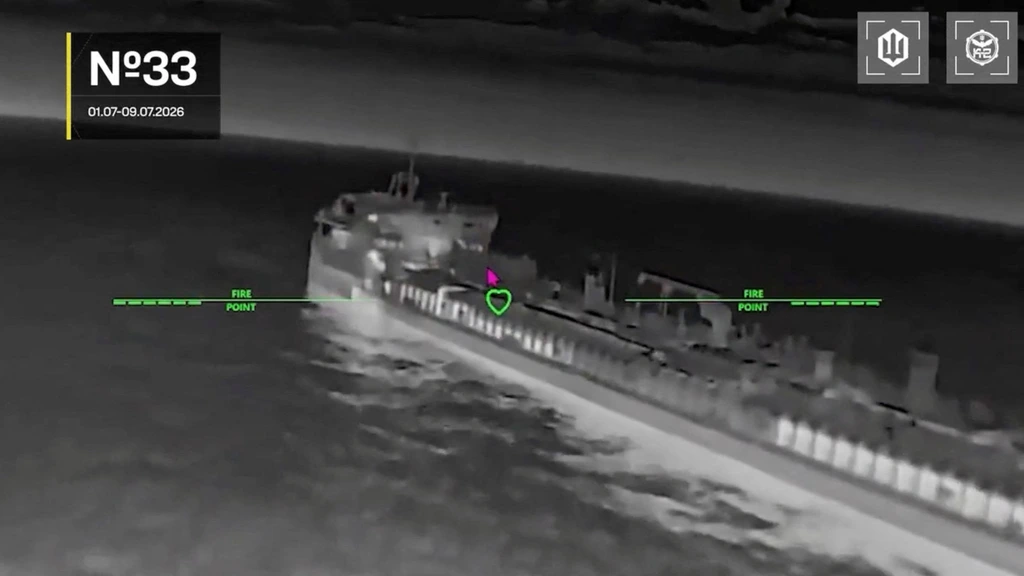
Ukraine has intensified its drone attacks, now targeting Russia's grain industry in addition to its oil tankers. Drone commander Robert Brovdi announced on Telegram that Ukrainian forces successfully struck Russia's shadow fleet in the Black Sea twenty times, following previous attacks on nearly one hundred Russian ships in the Sea of Azov. Brovdi expressed determination, stating, "We will hold on. Moscow will fall," and vowed to rebuild Crimea. While the Kremlin has not yet commented on the alleged losses, these actions signify a new phase in Ukraine's warfare strategy. Retired General Mart de Kruif noted that these maritime operations, prepared over months by weakening air defenses around Crimea and the Sea of Azov, are designed to inflict lasting damage on Russia's financial stability and war-fighting capacity. The attacks on the Black Sea and Sea of Azov, connected by the Kerch Strait, impact a key trade route responsible for a quarter of Russia's grain exports, directly affecting the country's economy. Former Royal Netherlands Navy deputy commander Ben Bekkering observed that Ukraine aims to weaken Russian logistics behind the front lines and potentially break the will of the Russian people by disrupting trade routes. Bekkering also highlighted Ukraine's impressive self-developed drone capabilities, noting that innovation is often driven by necessity during wartime. However, he cautioned that these attacks carry risks, particularly concerning global goodwill, as targeting grain ships could indirectly impact food security in Africa, a decision likely made at the highest political levels. Despite Ukraine's successes in striking Russian infrastructure, Bekkering pointed out that Ukraine remains vulnerable to Russian ballistic missile attacks, citing recent casualties in Odesa and Sumy.
Ukraine's strategic shift to target Russia's grain export infrastructure, alongside its oil fleet, represents a calculated escalation aimed at disrupting Russian revenue streams and logistical capabilities. This approach leverages Ukraine's developing indigenous drone technology to exert pressure beyond the immediate front lines, potentially influencing global commodity markets and domestic Russian sentiment. The move highlights the evolving nature of asymmetric warfare, where technological innovation and strategic targeting of economic arteries can compensate for conventional military disparities. However, the international implications, particularly concerning global food security and potential retaliatory actions, necessitate careful consideration of broader geopolitical stability and the preservation of humanitarian aid channels. The effectiveness of these tactics will ultimately depend on sustained innovation, resilient air defense against Russian counter-strikes, and the international community's response to the cascading effects on global trade and stability.
AI-generated to prompt reflection — not editorial opinion, not advice, not a statement of fact. How this works.