Ukrainians Protest Defense Minister's Dismissal by President Zelensky
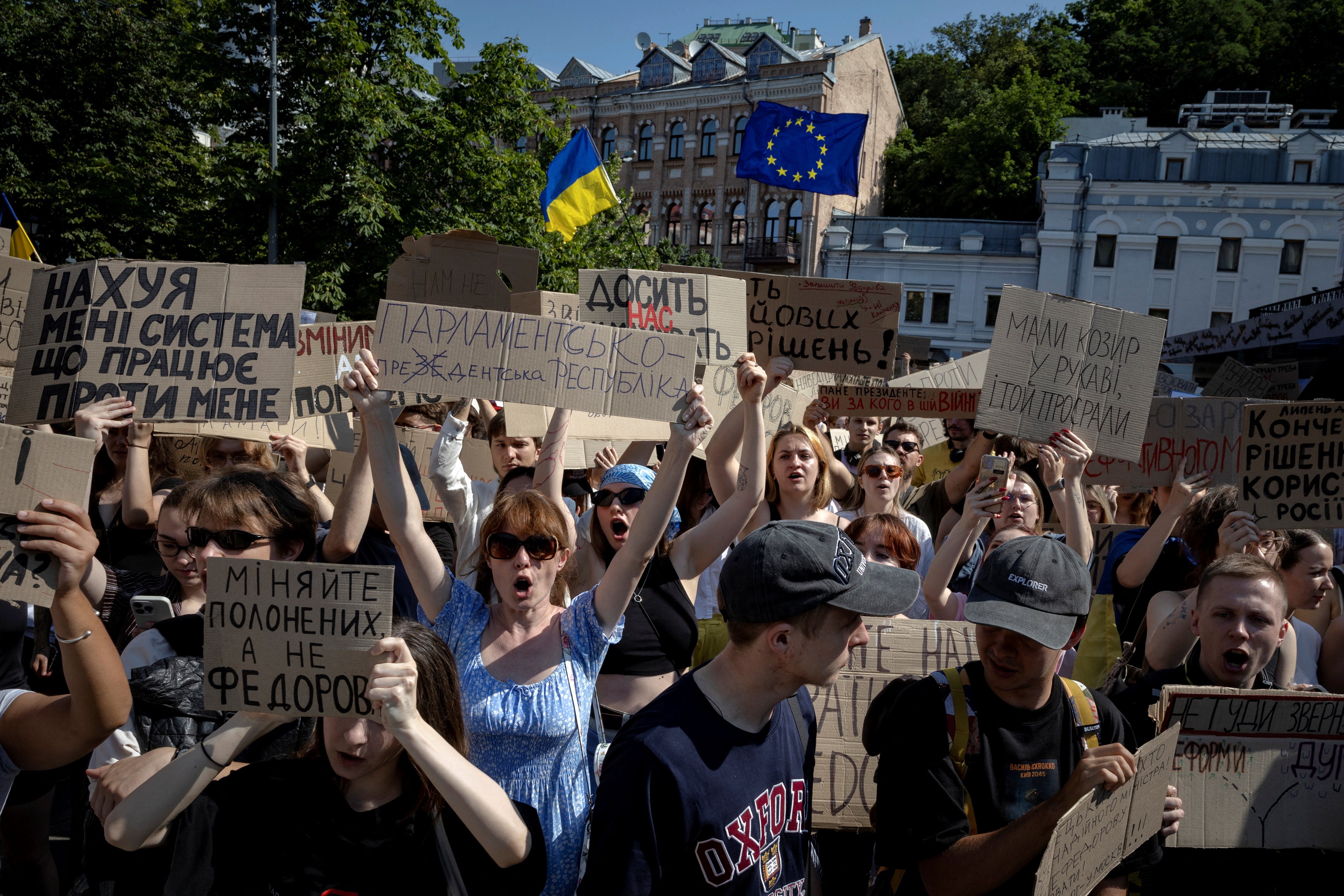
Thousands of Ukrainians took to the streets in Kyiv and other major cities like Kharkiv and Lviv on July 16, 2026, to protest the dismissal of Defense Minister Mykhailo Fedorov by President Volodymyr Zelensky. This marks the first time Zelensky has faced public protests since the beginning of his term and the conflict with Russia. The protests erupted following a broader ministerial reshuffle announced the previous Sunday. Demonstrators held signs urging the Ukrainian parliament to reject Zelensky's nominations for new ministers and called for Fedorov's reinstatement. Some protesters attribute Fedorov's removal to Commander-in-Chief Oleksandr Syrskyi, citing a strained relationship due to reforms initiated by Fedorov, including dismissals he enacted. Fedorov, appointed in January, was known for his efforts to reform the Ukrainian Armed Forces, integrate new technologies like drones, and secure services such as Elon Musk's Starlink to block Russian troops' internet access. He also initiated an unpopular but necessary reform of military procurement contracts to combat fraud. At 35, Fedorov was Ukraine's youngest defense minister, tasked with revitalizing the war effort. His departure has caused concern even among government supporters, with anti-corruption activists like Martina Boguslabets of the NGO Mezha expressing worry that Fedorov, seen as innovative and effective, is being replaced by a minister from a reportedly corrupt structure. The public fears Fedorov's removal might be due to his popularity and could signal a return to more traditional influences at a critical time for national defense.
The widespread public protests in Ukraine following the dismissal of Defense Minister Mykhailo Fedorov highlight a critical juncture in the nation's wartime governance. The public's strong reaction underscores a perceived disconnect between the executive's personnel decisions and the populace's desire for continuity in effective leadership, particularly concerning anti-corruption and technological advancement in defense. This event surfaces a systemic tension between the need for decisive leadership during conflict and the imperative for transparent, accountable governance that resonates with public trust. The narrative suggests that while reforms are necessary, their implementation and the subsequent personnel changes can inadvertently create instability and public apprehension, especially when perceived as potentially undermining popular and effective ministers. Future governance strategies may need to balance the swiftness of wartime decision-making with enhanced public communication and stakeholder engagement to maintain national cohesion and confidence.
AI-generated to prompt reflection — not editorial opinion, not advice, not a statement of fact. How this works.