UN Chief Commends Pakistan's Peace Efforts Amidst Escalating Global Conflicts
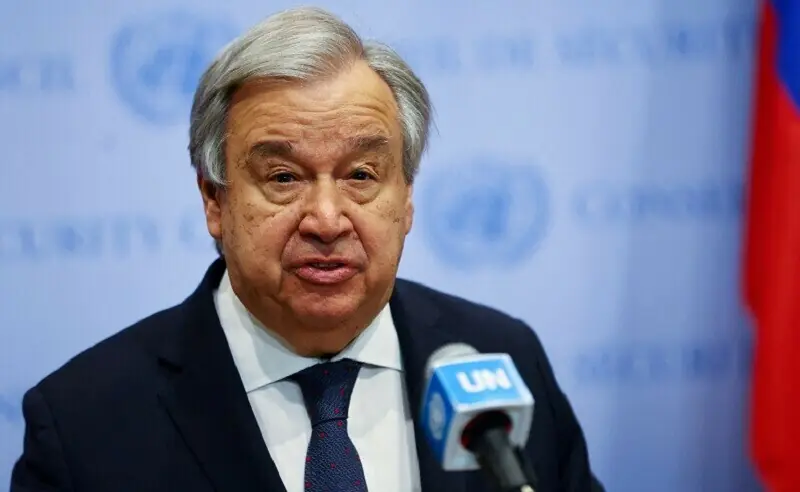
United Nations Secretary-General Antonio Guterres on Thursday lauded Pakistan's initiative at the UN Security Council (UNSC) to bolster mechanisms for peacefully resolving disputes. This move is particularly crucial as conflicts intensify in the Middle East and globally. Guterres addressed an open debate, convened under Pakistan-sponsored Resolution 2788 (2025), and proposed ways to enhance diplomacy, mediation, and conflict prevention for international peace and security. Pakistan had previously introduced this resolution during its UNSC presidency, emphasizing that diplomacy should be proactive in preventing crises, not just reactive after conflicts erupt. The UN chief stressed that military solutions are insufficient for lasting peace, urging restraint, civilian protection, and a renewed commitment to diplomacy, especially as the Middle East faces a "widening circle of confrontation." He called for an end to fighting throughout the region and the restoration of navigational rights in key straits. Guterres specifically acknowledged Pakistan and regional countries for their mediation efforts aimed at reducing tensions and fostering dialogue. He also highlighted the situation in the occupied West Bank, noting "creeping annexation with violence" and displacement. Pakistan's Permanent Representative to the UN, Ambassador Asim Iftikhar Ahmad, welcomed the secretary-general's recommendations, viewing them as vital for strengthening the UN Charter's principles. Ambassador Ahmad noted that the challenge lies not in a lack of mechanisms but in their inconsistent application, urging the Security Council to engage earlier in dispute resolution. He cited Pakistan's constructive mediating role between Iran and the United States as an example of its commitment to facilitating dialogue and emphasized that faltering negotiations require more determined diplomacy, not less.
The UN Secretary-General's commendation of Pakistan's diplomatic initiative underscores a critical global challenge: the increasing reliance on military responses over preventative diplomacy. The event highlights a systemic tension within international relations, where the urgency of immediate crises often overshadows long-term conflict prevention strategies. Pakistan's proposed resolution, emphasizing proactive mediation and negotiation, seeks to rebalance this dynamic. The analysis of this situation involves considering the incentive structures for states; diplomatic efforts, while crucial for long-term stability, may yield less immediate political or strategic gains than military posturing. Future international governance frameworks will need to incentivize and resource preventative diplomacy more effectively to counter the escalating cycle of conflict, particularly in a multipolar world where geopolitical competition can complicate mediation efforts. The effectiveness of Resolution 2788 will ultimately depend on sustained commitment and consistent implementation by member states, moving beyond symbolic adoption to tangible action.
AI-generated to prompt reflection — not editorial opinion, not advice, not a statement of fact. How this works.