UN Chief Guterres Pledges Reconstruction Aid to Syria in First Visit Since 2009
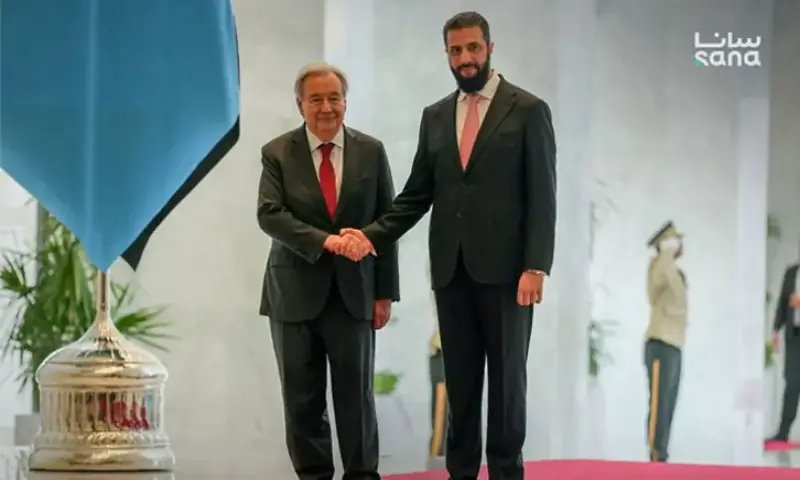
United Nations Secretary General Antonio Guterres visited Damascus on Saturday, marking the first trip to Syria by a serving UN chief in 17 years. During his visit, Guterres met with Syrian President Ahmed al-Sharaa at the presidential palace and pledged support for the country's reconstruction efforts. He emphasized the need for international assistance, stating, "No country emerges from a very severe conflict and rebuilds itself on its own." Syrian Foreign Minister Asaad al-Shaibani reiterated Syria's request for increased support, particularly from the European Union, and highlighted discussions on augmenting UN aid for reconstruction and closing displacement camps. Guterres also addressed the situation in the Golan Heights, calling it "totally unacceptable" and supporting Syria's demand for an Israeli withdrawal from a UN-patrolled buffer zone where Israeli forces deployed in 2024. This visit occurs during a transitional period for Syria, following the end of a civil war that began in 2011 and led to widespread displacement and casualties. President Sharaa, who came to power after ousting Bashar al-Assad in late 2024, is working to rebuild Syria's international ties and economy. Guterres' itinerary includes meetings with other government officials, civil society representatives, and an address to the Syrian parliament. The UN spokesperson indicated that the visit aims to underscore Syria's opportunity to build a more stable, inclusive, and prosperous future.
UN Secretary General Guterres' visit to Syria signifies a critical juncture in the nation's post-conflict recovery and its re-engagement with the international community. The pledge of reconstruction support, while essential for humanitarian reasons, occurs against a backdrop of complex geopolitical dynamics and Syria's ongoing efforts to re-establish diplomatic and economic ties. The UN's role in facilitating aid and advocating for territorial integrity, particularly concerning the Golan Heights, highlights the persistent challenges in achieving lasting regional stability. As Syria navigates its recovery, the international community faces the ongoing imperative to balance humanitarian assistance with principles of accountability and sustainable peace, considering the long-term implications for regional security and governance structures in the coming decade.
AI-generated to prompt reflection — not editorial opinion, not advice, not a statement of fact. How this works.