UN General Assembly Renews Volker Turk's Human Rights Chief Mandate Amid US, Russia, Israel Opposition
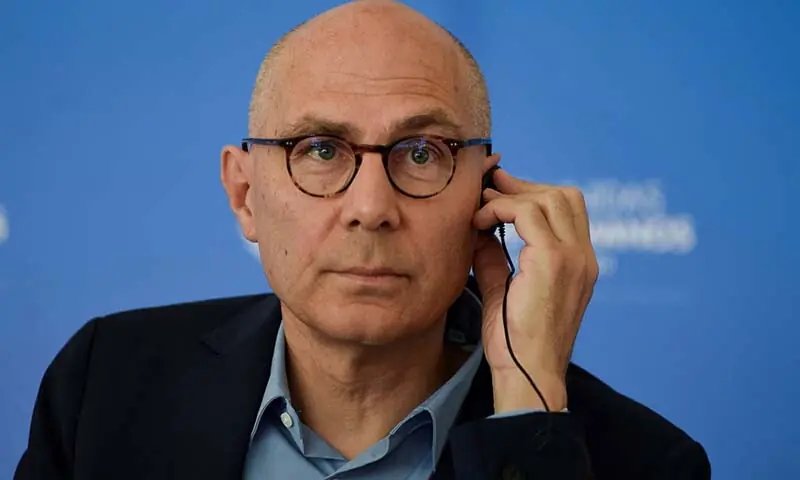
The United Nations General Assembly has voted to extend Volker Turk's term as High Commissioner for Human Rights for four years, commencing October 12, 2026. This decision was made despite significant opposition from the United States, Russia, and Israel. The assembly approved the renewal with 144 votes in favor, 10 against, and 13 abstentions, as proposed by UN Secretary-General Antonio Guterres. An alternative proposal from Russia to shorten the extension was overwhelmingly rejected, as was a US request to delay the vote. The US representative criticized the four-year renewal, citing procedural issues and accusing the Secretary-General of rushing the process to benefit a "long-term friend." Conversely, France's ambassador lauded Turk as a "voice of conscience" who exhibited "rigor and impartiality" during his initial term. Turk, an Austrian jurist who has held the position since October 2022, has advocated for the universality of human rights and the equal application of international law. He has publicly addressed numerous global conflicts and human rights issues, including those in Ukraine, Gaza, Afghanistan, Sudan, Bangladesh, Myanmar, and Nicaragua. However, he has also faced criticism for perceived insufficient action on issues concerning Cuba and the Uyghurs in Xinjiang, China, and for not explicitly using the term "genocide" regarding Gaza. Both Russia and Israel expressed their opposition, arguing that the selection of the human rights chief should fall to the next Secretary-General.
The UN General Assembly's decision to renew Volker Turk's mandate highlights a divergence in geopolitical perspectives on human rights oversight. While a significant majority supported the continuation of his term, the opposition from key member states like the US, Russia, and Israel signals ongoing tensions regarding the perceived impartiality and scope of the High Commissioner's mandate. The procedural criticisms raised by the US suggest a broader debate about transparency and influence in UN appointments, particularly concerning the timing and perceived favoritism in the selection process. The differing national responses underscore the complex challenge of applying universal human rights standards across diverse political systems and national interests, especially in the context of international conflicts. Future effectiveness of the High Commissioner's office may depend on navigating these geopolitical fault lines and demonstrating consistent, equitable application of international law to foster broader consensus.
AI-generated to prompt reflection — not editorial opinion, not advice, not a statement of fact. How this works.