Understanding Evaporation: Factors Influencing the Transformation of Matter
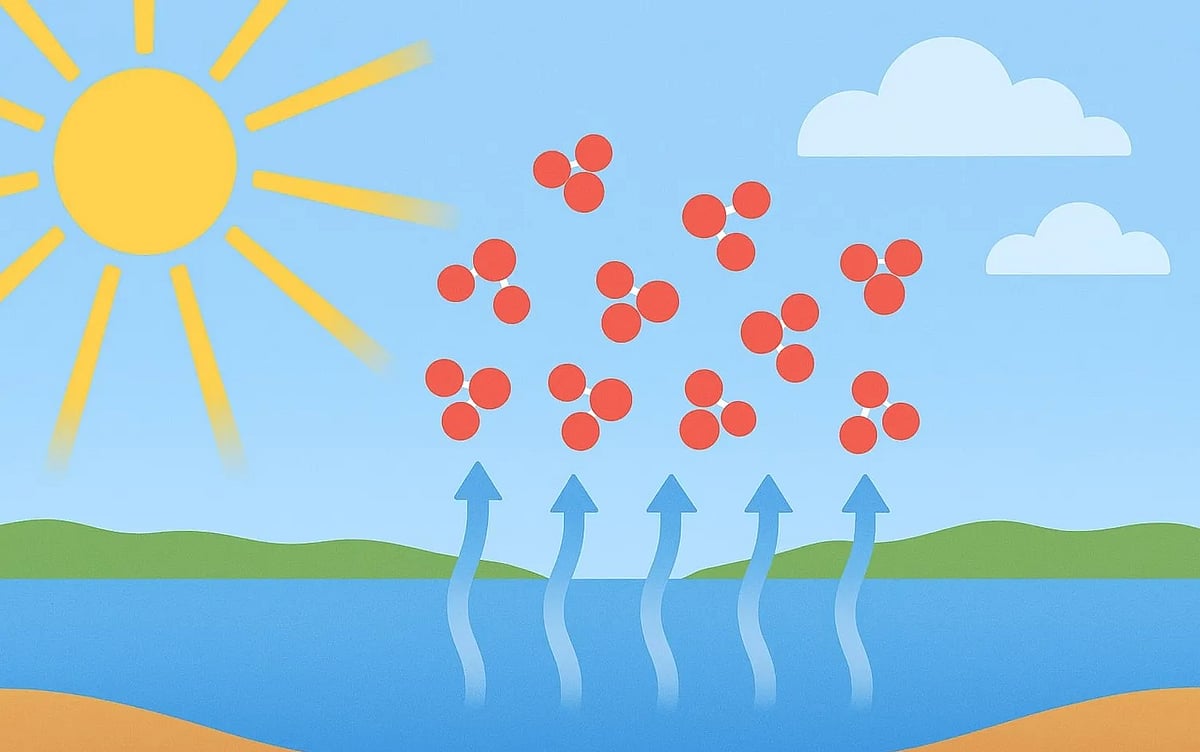
The article explains the physical processes of matter transformation, focusing on evaporation. It details how heating solids increases molecular kinetic energy, weakening bonds until they melt into liquids. Further heating breaks these bonds completely, turning liquids into gases at their boiling points. For example, iron melts at 1538°C and boils at 2862°C, while water melts at 0°C and boils at 100°C. However, matter can change states without reaching these specific temperatures. Evaporation is defined as the process where a liquid turns into a gas below its boiling point. This occurs because molecules at the surface gain enough energy to overcome intermolecular forces and escape into the atmosphere. Factors like air flow, surface area, and the liquid's nature influence evaporation rates. Liquids with lower boiling points, like water, evaporate more readily than those with high boiling points, such as molten iron. Increased ambient temperature also accelerates evaporation. Conversely, air pressure hinders evaporation; lower pressure facilitates it. The most significant factor is air dryness, or humidity. Dry air absorbs moisture more readily, increasing evaporation, while humid air reduces it. This explains why clothes dry faster in dry winter air despite lower temperatures, compared to humid summer days.
This explanation of evaporation provides a foundational understanding of phase transitions driven by energy transfer. It highlights how molecular interactions and environmental conditions dictate the rate of change, moving beyond simple temperature thresholds. The analysis underscores the interplay between internal molecular forces and external atmospheric dynamics, such as air pressure and humidity. Understanding these factors is crucial for predicting and managing processes ranging from weather patterns to industrial applications. Future considerations may involve how advanced materials or controlled atmospheric environments could further manipulate these phase transition dynamics, potentially optimizing resource management or creating novel technological capabilities. The discussion implicitly points to the efficiency of energy transfer and the role of surface phenomena in accelerating physical processes.
AI-generated to prompt reflection — not editorial opinion, not advice, not a statement of fact. How this works.