Understanding Fire Clouds and Their Role in Europe's Worsening Wildfires
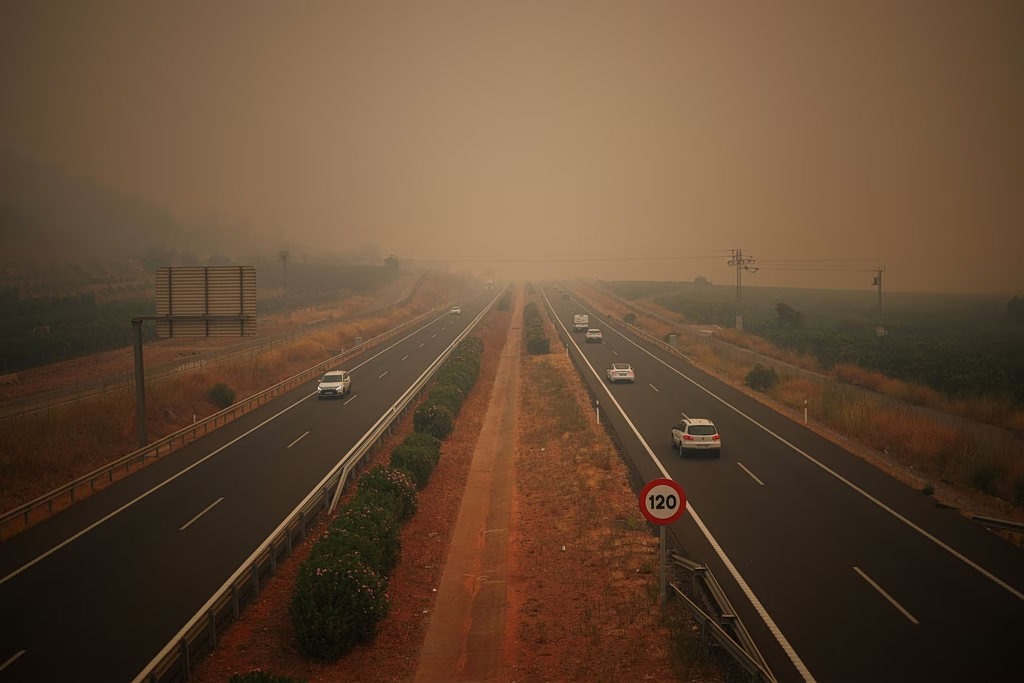
Pyrocumulonimbus clouds, also known as fire clouds, are presenting a significant challenge to scientists as they may exacerbate the effects of destructive wildfires currently affecting Europe. These extreme weather phenomena arise when intense heat, strong winds, and dry conditions create a dangerous environment conducive to rapid fire spread. However, in some instances, the fires themselves generate unique atmospheric conditions that contribute to their own intensification. The formation of these fire clouds is a complex process linked to the extreme heat generated by large wildfires, which can cause air to rise rapidly, carrying smoke and embers high into the atmosphere. As this superheated air ascends, it cools and condenses, forming towering clouds that can resemble thunderstorms. These clouds can then produce their own weather, including lightning, which can spark new fires, and strong downdrafts that can spread existing flames. This self-perpetuating cycle poses a serious threat, making it even more difficult for firefighters to contain the blazes. The phenomenon highlights the interconnectedness of climate, weather, and extreme events, underscoring the need for advanced monitoring and prediction systems to manage these escalating risks.
The emergence of pyrocumulonimbus clouds in Europe signifies a critical feedback loop where extreme heat from wildfires generates atmospheric conditions that can further intensify and spread these fires. This phenomenon underscores the complex interplay between climate change-induced heatwaves and the behavior of large-scale fires. From a systems perspective, these fire clouds represent an emergent property of uncontrolled combustion under specific meteorological conditions, capable of creating secondary ignition sources and altering local wind patterns. Future wildfire management strategies will likely need to incorporate advanced atmospheric modeling to anticipate and mitigate the risks posed by such self-sustaining fire events, moving beyond traditional ground-based suppression tactics.
AI-generated to prompt reflection — not editorial opinion, not advice, not a statement of fact. How this works.